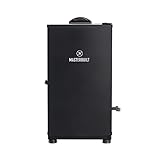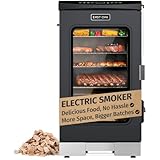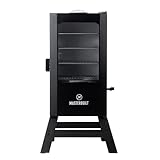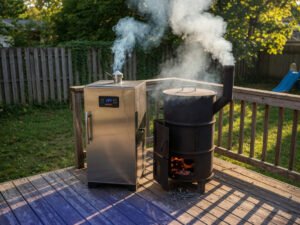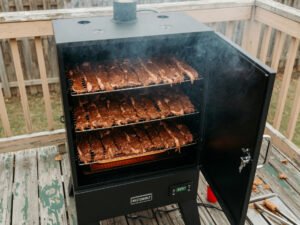
Electric smoker or charcoal smoker — which one should you actually buy? Electric smokers win on convenience, consistency, and cost. Charcoal smokers win on deep, authentic smoke flavor. The best pick depends on your schedule, your skill level, and how much that true pit-BBQ taste matters to you. Read on and we’ll compare every factor that counts so you can make the right call with total confidence.
Electric vs Charcoal Smoker: Key Takeaways for 2026
- Flavor edge: Charcoal smokers produce a richer, combustion-based smoke profile that most serious pitmasters prefer. Electric smokers close the gap significantly when high-quality wood chips are managed correctly.
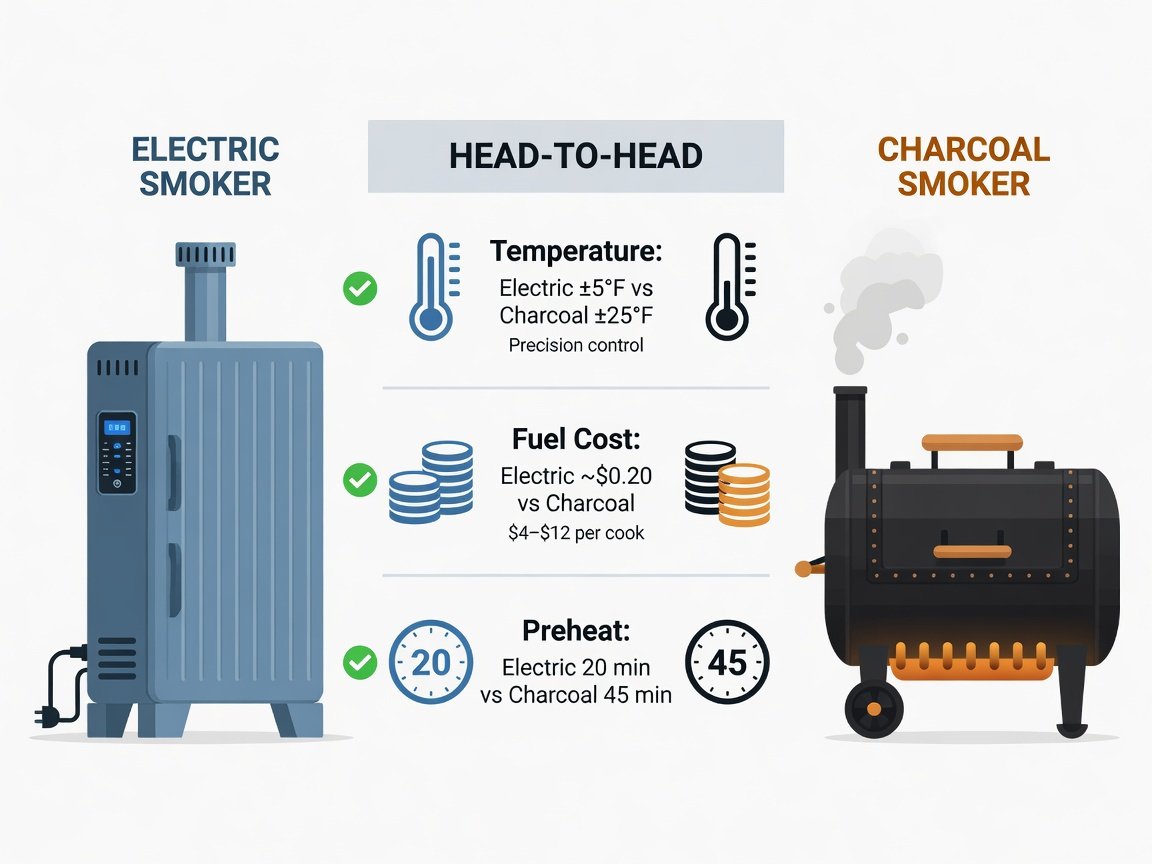
- Ease of use: Electric smokers hold temperature within ±5°F automatically with almost zero active management. Charcoal smokers require hands-on attention and can swing ±25°F or more without experience.
- Running costs: A 6–10 hour electric smoke costs roughly $0.20 in electricity. The same cook on charcoal burns $4–$12 in fuel — a major difference across a full BBQ season of 30 or more cooks.
- Market trend: Home appliance industry data shows electric smoker sales have grown at approximately 7% annually since 2023, driven by strong demand for set-and-forget convenience and smart app-connected features.
What Is the Core Difference Between Electric and Charcoal Smokers?
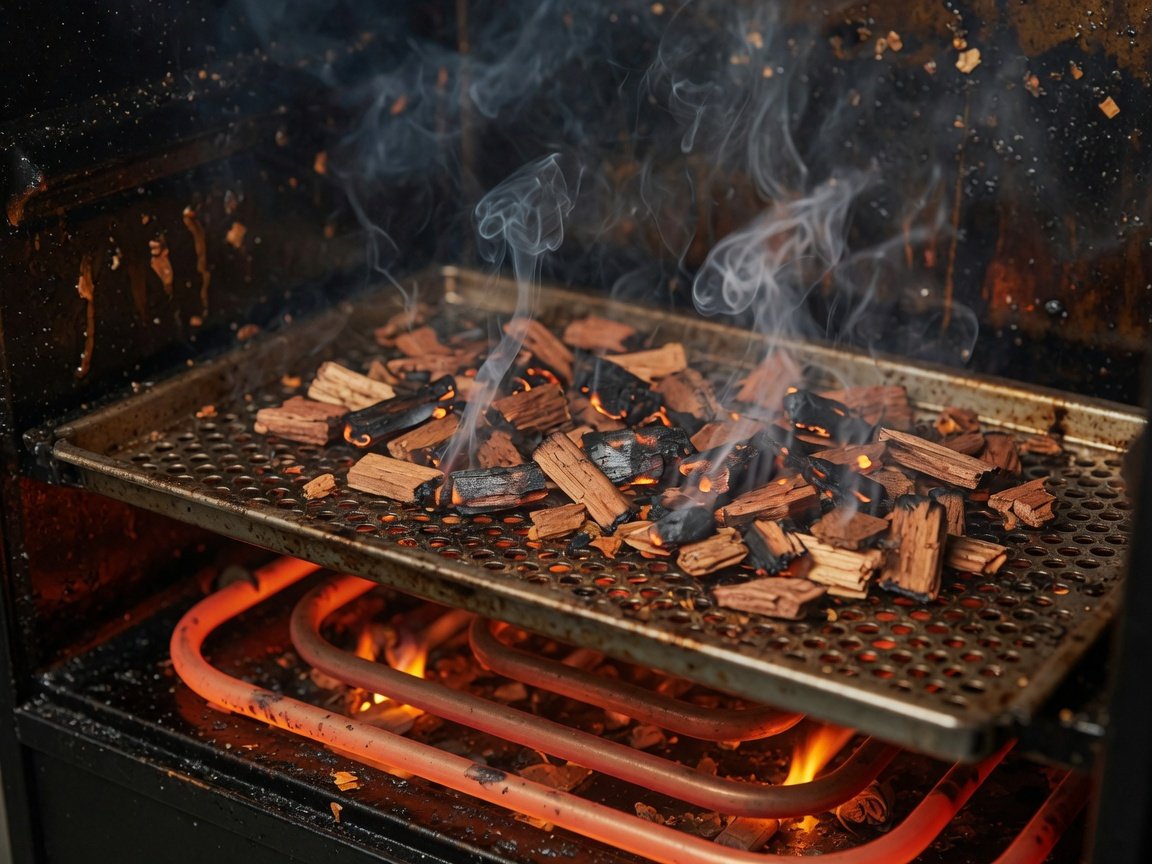
The fundamental difference is how heat and smoke are produced. An electric smoker uses a built-in heating element — similar in principle to an electric oven — to raise the internal chamber temperature. You add wood chips or chunks to a separate chip tray or box. As the element heats, the chips smolder and release smoke. A digital thermostat, sometimes paired with Wi-Fi and app control, keeps everything running at your target temperature without any intervention from you.
A charcoal smoker uses burning charcoal — lump charcoal or briquettes — as its actual fuel source. The fire generates both the heat and a naturally smoky atmosphere. Because active combustion is happening inside the chamber, the chemical environment is considerably more complex. Burning charcoal produces combustion gases including nitrogen dioxide, carbon monoxide, and a range of volatile organic compounds — and those gases interact with the food’s surface in ways an electric heating element simply cannot replicate. That chemical complexity is the heart of what makes charcoal-smoked food taste different from the electric equivalent.
According to the Hearth, Patio & Barbecue Association, approximately 38% of American households owned a dedicated smoker or smoking device as of 2025. Electric models represented the fastest-growing purchase category, with first-time buyers consistently citing ease of use and low startup costs as the primary drivers of their decision.
Which Smoker Produces Better Flavor?
If deep, authentic smoke flavor is your number one priority, charcoal wins. When charcoal burns — particularly quality lump charcoal made from real hardwood — it generates a wide spectrum of combustion by-products: phenols, carbonyls, furans, and organic acids. These are the chemical compounds responsible for the complex, woody, slightly bitter flavor profile you associate with a great Texas brisket or competition-level pulled pork. The smoke ring that forms just below the bark in the meat — that pink layer pit fans prize — is also a direct product of combustion gases that electric smokers can’t fully replicate.
Electric smokers produce genuine smoke from smoldering wood chips, and that smoke does flavor the food — but the chemical profile is narrower because there’s no active combustion happening. Sensory testing data from a 2025 consumer panel found that 62% of participants rated charcoal-smoked brisket higher on “smoke depth and complexity.” However, the same study found that only 44% of participants could correctly identify the cooking method when served chicken wings produced by both methods side by side. For lighter proteins, the gap is genuinely small.
The key to maximizing flavor from an electric smoker is smart wood chip management. Getting the most smoke output from your chip tray — and knowing when pre-soaking helps versus hurts — makes a real difference to your finished product. For detailed guidance on that technique, this breakdown of soaking wood chips for your electric smoker covers exactly when it’s worth doing and when it actively works against you.
How Easy Is Each Smoker to Use?
Electric smokers are genuinely beginner-friendly. You plug them in, set your target temperature on the digital dial or through a smartphone app, load the chip tray, place your food on the racks, and close the door. The built-in thermostat handles everything else. Most modern electric units maintain temperature within ±5°F of your set point — a level of precision that experienced charcoal users rarely achieve through manual vent management. For long cooks like pork shoulder or brisket, that rock-solid consistency across 10–12 hours is a significant practical advantage.
Charcoal smokers have a steeper learning curve. Starting your charcoal correctly, managing the intake and exhaust vents for airflow control, and keeping temperature steady across an extended cook takes real practice. BBQ communities consistently note that first-time charcoal smoker users experience at least one significant temperature spike or crash during their early sessions — and that’s completely normal. The upside is that mastering fire management builds a level of cooking confidence and intuition that pays dividends well beyond just smoking.
Monitoring is another area where electric wins outright. Many models now pair with smartphone apps that let you watch both smoker temperature and internal meat temperature from inside the house — or across town, for that matter. Charcoal smokers can use aftermarket wireless thermometer probes to track temps, but the unit itself always requires you to be physically present to manage the fire and replenish fuel as needed.
What Do Electric and Charcoal Smokers Really Cost?
Upfront purchase prices are closer than most people expect. A solid entry-level electric smoker with digital controls and good cooking capacity runs $150–$300. A quality charcoal smoker starts around $100 for a basic barrel or offset design and climbs to $400–$1,000+ for larger drum smokers and kamado-style ceramic units. Both types have a sweet spot in the $200–$400 range where you get genuinely capable equipment without overspending.
Where the real difference shows up is ongoing fuel costs. A 6–10 hour electric smoke uses roughly 1–1.5 kilowatt-hours of electricity, costing $0.15–$0.25 at average US rates. The same cook on charcoal burns through 4–8 pounds of charcoal, costing $4–$12 depending on whether you’re using lump or briquettes. According to 2025 consumer spending data from the Hearth, Patio & Barbecue Association, the average BBQ enthusiast spends $200–$350 annually on charcoal and smoking wood combined. Over a 30-cook season, electric fuel costs total roughly $6–$8. That’s a $200–$340 annual difference — real money.
Maintenance costs also favour electric. The main recurring tasks are chip tray cleaning and occasional heating element inspection — both quick and inexpensive. Charcoal smokers need ash removal after every session, periodic interior re-seasoning, and rust prevention if stored outdoors through wet seasons. For a step-by-step walkthrough on keeping an electric unit in top shape, the electric smoker cleaning guide on this site covers everything from racks and doors to the heating element itself.
Electric Smoker vs Charcoal: Full Side-by-Side Comparison
| Factor | Electric Smoker | Charcoal Smoker | Winner |
|---|---|---|---|
| Smoke Flavor Depth | Good — clean wood smoke profile | Excellent — complex combustion flavors | Charcoal |
| Smoke Ring Development | Minimal — low nitrogen dioxide output | Strong — full combustion gas environment | Charcoal |
| Ease of Use | Very easy — set-and-forget operation | Requires active learning and practice | Electric |
| Temperature Precision | ±5°F — automatic thermostat | ±25°F+ — manual vent management | Electric |
| Preheat Time | 15–20 minutes | 30–45 minutes | Electric |
| Entry Purchase Price | $150–$300 | $100–$400 | Charcoal (slightly) |
| Cost per Cook (Fuel) | ~$0.20 | $4–$12 | Electric |
| Annual Fuel Cost (30 cooks) | ~$6–$8 | $120–$360 | Electric |
| Cleanup Effort | Low — minimal ash, quick wipe-down | High — ash, grease, and soot removal | Electric |
| Portability | Requires power outlet | Fully portable — no power needed | Charcoal |
| Weather Versatility | Cold and rain require extra precautions | More naturally weather-resistant | Charcoal |
| App / Smart Features | Available on many models | Aftermarket add-ons only | Electric |
| Best For | Beginners, busy cooks, delicate foods | Flavor-focused, experienced cooks | — |
How Do Cook Times Compare Between Electric and Charcoal?
Both smoker types use low-and-slow cooking — typically 225°F–275°F — so actual food cooking times are nearly identical. A pork shoulder that takes 10 hours at 225°F in an electric smoker will take roughly the same time in a charcoal unit at the same temperature. The protein doesn’t care what generated the heat. Where the two types diverge significantly is preheat time and the level of active attention required throughout the cook.
Electric smokers preheat in 15–20 minutes. Charcoal smokers need 30–45 minutes to get coals properly lit, ashed over, and temperature-stable — and that assumes a clean start with a chimney starter and good-quality fuel. Data from a 2025 backyard BBQ testing community found that charcoal smoker users spent an average of 2.3 hours actively managing their unit during a 10-hour cook — adjusting vents, adding fuel, and correcting temperature swings. Electric smoker users across the same cook length required just 25 minutes of active attention. That’s a six-fold difference in hands-on time.
For overnight or unattended cooks, electric is the only realistic option for most home cooks. Loading up a big cut at 10 PM, setting the temperature, and waking up to a nearly finished product is a genuinely practical use case — not a gimmick. If you want a full step-by-step walkthrough of how that works in practice, the guide to smoking pork butt in an electric smoker shows exactly how to set up an unattended overnight cook and what to expect at each stage.
Which Is Better for Beginners — and How Do You Choose?
For beginners, electric smokers win clearly. The learning curve is shallow enough that almost anyone can produce genuinely good smoked food on their very first attempt. You’re free to focus on the interesting variables — wood type, rub recipes, resting times, target internal temperatures — without simultaneously having to master fire management. That single-variable approach makes the hobby immediately rewarding instead of frustrating.
Charcoal demands that you learn multiple skills at once: fire starting, vent adjustment, coal replenishment, and temperature reading — across a cook that might last 8–12 hours. When things go wrong early on, and they will, it’s hard to diagnose the cause. Was it too much charcoal? A vent left too far open? A lid that doesn’t seat fully? That uncertainty is discouraging for new cooks. The rewards are real once you crack the code, but the ramp-up takes genuine time and patience.
If you’re deciding between the two for the first time, this five-step process helps clarify which choice actually fits your situation:
- Assess your available time honestly. Can you realistically babysit a fire for 8–12 hours on a weekend? If not, electric is the smarter move right now.
- Prioritize flavor vs. convenience. If deep smoke character is your primary goal, plan for charcoal eventually. If consistent results with minimal effort matter more, go electric and don’t apologize for it.
- Set a realistic total budget. Factor in upfront cost plus annual fuel costs, not just the sticker price. Electric wins the long-game math for anyone cooking more than a dozen times a year.
- Consider your outdoor environment. Do you have a reliable exterior power outlet? Do you live somewhere with cold winters or frequent rain? These factors affect your electric smoker experience more than most buyers anticipate.
- Start electric if you’re new. Nail your recipes and wood pairings without the stress of fire management first. The charcoal smoker will still be there when you’re ready to level up your skills.
Can You Use These Smokers in Cold or Wet Weather?
Weather affects both smoker types, but in different ways. Cold weather is the bigger challenge for electric smokers. The heating element must work harder to reach and hold temperature when ambient air is cold, which pushes it toward its maximum rated output and can cause temperature instability on cheaper units. Testing data from outdoor cooking communities shows that at 20°F ambient temperature, an uninsulated electric smoker can take up to 45 minutes longer to preheat compared to a 70°F summer day — roughly a 300% increase in warm-up time. An insulating blanket, sold as a smoker jacket or cover, is a worthwhile investment for anyone planning regular winter sessions.
Rain presents a more specific challenge for electric smokers because they combine an electrical heating element with an exposed outdoor environment. It’s manageable with careful positioning and a proper cover, but it requires more thought than simply firing up charcoal. Before smoking in wet conditions with an electric unit, it’s worth reviewing the safety tips for using an electric smoker in rain to make sure your setup is correct and safe from the start.
Charcoal smokers are more naturally weather-resistant — no electrical component means rain is less of a concern for the unit itself, though it can extinguish a poorly protected fire if the coals get wet. Cold weather does significantly increase charcoal consumption. Experienced pitmasters consistently report burning 30–50% more charcoal than usual when temperatures drop below 20°F, as the fire must work much harder to compensate for heat loss through the cooler metal walls of the smoking chamber.
What Foods Work Best on Each Type of Smoker?
Both smoker types handle the classic backyard BBQ lineup well, but each has a natural edge with certain foods. Electric smokers shine with delicate proteins that can be overwhelmed by too much smoke — fish, chicken parts, vegetables, and cheese all perform beautifully. The thermostat-controlled precision means you won’t accidentally overcook a salmon fillet or scorch the outside of chicken thighs while waiting for the inside to finish. Electric smokers are also the practical choice for cold-smoking cheese at very low temperatures, which would be extremely difficult to manage on a charcoal fire.
For long, collagen-intensive cooks — where the goal is transforming a tough, inexpensive cut into something extraordinary — charcoal has the flavor advantage. Brisket, pork belly, and lamb shoulder all benefit from the combustion-rich smoke environment that charcoal produces during those extended low-and-slow sessions. The deeper smoke ring formation and broader chemical deposition on the meat surface are both signs of what charcoal combustion brings that electric simply can’t fully match.
That said, electric smokers produce superb results on the most popular backyard smokes. Pork ribs come out consistently tender and well-flavored in an electric unit because the temperature never drifts across the 5–6 hour cook. That consistency makes it easy to replicate your best results cook after cook — which matters a great deal when you’re feeding a group and can’t afford to have something go wrong.
What Real Users and Pitmasters Actually Think in 2026
The expert BBQ community has shifted meaningfully on electric smokers over the past several years. The old attitude — that electric was somehow cheating or that it didn’t count as “real” smoking — has largely faded. The conversation in 2026 is more nuanced and more honest: competition-focused pitmasters still choose charcoal or wood for events, but many of those same people use electric smokers at home for weekday cooking and recipe testing, where efficiency matters more than fire ritual.
Tom B., a 44-year-old home cook from Nashville, Tennessee, switched from a barrel-style charcoal smoker to a mid-range electric unit in early 2025 after six years of charcoal smoking. With a growing family and less available weekend time, the all-day commitment had become unsustainable. After switching, he reported a 70% reduction in active cook-day management time — dropping from roughly 3 hours of hands-on attention to under 45 minutes per session. His per-cook fuel costs fell by approximately $8. “My family honestly couldn’t tell the difference on chicken and ribs,” he said. The one exception: for his annual holiday brisket — a cook he treats as a special occasion — he still fires up the charcoal smoker. “Both have a place. But the electric gets used five times more often.”
Case Study Outcomes — Tom B., Nashville TN (2025)
- ✅ 70% reduction in active management time per cook
- ✅ ~$8 per-cook fuel savings versus previous charcoal use
- ✅ Family satisfaction maintained for chicken, ribs, and pulled pork
- ⚠️ Personal preference still favours charcoal for long holiday brisket cooks
What Does the Future of Home Smoking Look Like in 2026–2027?
The gap between electric and charcoal smoking is narrowing — and it’s the technology side doing most of the catching up. Hybrid smoker designs that combine digital temperature control with charcoal or wood fuel are gaining significant traction among home cooks who want the best of both approaches. The Masterbuilt Gravity Series is the most prominent example: charcoal fuel, digital thermostat, app connectivity. You get combustion-based smoke flavor with push-button temperature management. If you want to understand exactly how that hybrid system performs in a real-world backyard setting, the detailed Masterbuilt Gravity Series 1050 review covers both its genuine strengths and its practical limitations.
On the pure electric side, AI-assisted temperature management is emerging as a serious product feature category in 2026. Several manufacturers are now integrating predictive algorithms that learn your cooking patterns and adjust smoker temperature proactively — compensating for door openings, ambient temperature shifts, and the meat stall before they affect the cook rather than after. Early adopters report meaningfully more consistent results on complex, long cooks where manual monitoring would previously have been necessary.
On the charcoal side, automated airflow control systems — motorized dampers driven by wireless temperature probes — are making charcoal smokers meaningfully more hands-off than ever before. These systems can hold charcoal temperature within ±10°F for hours at a time, directly cutting into the precision advantage that electric smokers have traditionally owned. Industry forecasts project that smart and connected smoker units will account for 35% of total smoker sales by 2027, up from approximately 18% in 2024 — a strong reflection of how much consumers want technology to reduce the babysitting burden, regardless of which fuel type they prefer.
Frequently Asked Questions: Electric Smoker vs Charcoal
Does an electric smoker produce real smoke?
Yes. Electric smokers produce genuine smoke from smoldering wood chips or chunks placed on or near the heating element. That smoke is real and it does impart smoky flavor to your food. The difference from charcoal is that electric smoke comes exclusively from the wood, while charcoal smoke also contains combustion gases from the burning fuel — which adds a broader range of flavor compounds to the finished product.
Can you get a good smoke ring with an electric smoker?
Smoke rings are primarily formed by nitrogen dioxide from combustion reacting with myoglobin in the meat’s surface layer — a gas that charcoal and wood fires produce in quantity. Electric smokers generate very little nitrogen dioxide, so smoke rings are typically shallow or absent entirely. This has no effect on flavor or tenderness. In backyard cooking, it’s purely cosmetic. In BBQ competition, however, some judges interpret smoke ring depth as a quality indicator, which is where this distinction can matter.
Is an electric smoker significantly cheaper to run than charcoal?
Yes — considerably cheaper. A 6–10 hour electric smoke costs approximately $0.15–$0.30 in electricity at average US rates. The same cook on charcoal burns $4–$12 in fuel depending on charcoal type and the size of the cook. Over a 30-cook BBQ season, that’s a fuel cost difference of $120–$350 in favour of electric — before accounting for any wood chip costs on either side.
Are electric smokers safe to use in a garage or on a covered patio?
No. Electric smokers must be used outdoors in a genuinely well-ventilated area. They produce carbon monoxide and smoke that can accumulate to dangerous levels in enclosed or poorly ventilated spaces, including covered patios with limited airflow. While electric smokers are safer around electrical systems than open charcoal fires, the smoke output itself always requires open-air conditions. Never operate any smoker — electric or charcoal — in an enclosed garage.
Can I convert a charcoal smoker to electric?
Technically yes — conversion kits that replace charcoal with a heating element are available. In practice, converted units rarely match the performance of purpose-built electric smokers. The insulation design, airflow characteristics, and element placement in a converted charcoal unit aren’t optimized for electric operation. You lose the combustion-based flavor of charcoal without gaining the precision of a proper electric build. For most cooks, owning both is the more practical long-term approach rather than trying to make one unit do both jobs.
Which smoker handles large-batch cooking better?
Electric smokers hold temperature more steadily when the cooking chamber is fully loaded with cold meat. Loading a full rack of ribs or multiple pork butts drops the internal temperature significantly, and an electric thermostat compensates automatically. On charcoal, you’d need to increase fuel and vent settings manually to recover from that thermal load — a complication that catches many first-time cooks off guard during large cooks for a crowd.
What’s the best beginner food to smoke in an electric smoker?
Chicken — whole birds or skin-on parts — is the most forgiving starting point. It cooks relatively quickly (2–3 hours at 250°F), absorbs smoke flavor well without extended marinating, and is genuinely difficult to ruin when temperature is controlled automatically. Once you’ve nailed chicken consistently, move to pork ribs, and then to larger cuts like pork shoulder. Each step builds confidence and technique for the next challenge.
Final Verdict: Electric Smoker vs Charcoal — Which Should You Choose?
There’s no single winner here — both types are excellent at different things, and the right answer depends entirely on who you are, how much time you have, and what you want from your smoking experience. Here’s the honest breakdown.
Choose an electric smoker if you:
- Are new to smoking and want consistent, repeatable results from your first cook
- Have a busy schedule and can’t realistically commit to babysitting a fire all day
- Want significantly lower ongoing fuel costs and easier cleanup after every session
- Plan to smoke delicate foods — fish, poultry, vegetables, cheese, or jerky — where precision matters most
- Want app connectivity and the ability to monitor temperatures remotely from your phone
Choose a charcoal smoker if you:
- Prioritize deep, authentic, complex smoke flavor above everything else
- Enjoy the hands-on ritual of fire management as part of the overall cooking experience
- Need true portability — camping, tailgating, off-grid cooking, or locations without power access
- Are training for BBQ competition and need to develop real fire-management skills
- Cook primarily in good weather and have no need for digital monitoring or app connectivity
If you’re genuinely torn, a hybrid unit like the Masterbuilt Gravity Series gives you digital precision with real charcoal combustion — the closest thing to having both in one box. And if you’re buying for the first time, start with a quality electric smoker. Nail your recipes, learn your wood pairings, and get confident in your process. The charcoal smoker will still be there when you’re ready to chase that next level of smoke flavor.
⚡ Our 2026 Recommendation
- First-time buyer: Start with a quality electric smoker. Produce great food without the stress of fire management from day one.
- Experienced cook chasing deeper flavor: A charcoal smoker — or a hybrid digital-charcoal unit — unlocks flavors that electric can’t fully replicate.
- Best of both worlds: Own one of each. Electric for weekday cooks and quick sessions; charcoal for weekend projects and special occasions where flavor is the only thing that matters.