About 70 % of steak lovers say the reverse‑sear is the only way to get a perfect crust without overcooking the interior, and we’ve found that true for a tomahawk on a gas grill. We’ll start by dry‑brining the meat, then set up a low‑heat zone at roughly 250 °F and a hot spot for the finish, maybe even slipping in a wood‑smoker tube for a hint of aroma. After cooking until the internal temperature hits 110‑120 °F, we’ll flip once, sear quickly over the high‑heat burner, rest, butter‑baste, and slice. The next steps will show exactly how to balance timing, temperature, and flavor so the steak stays juicy and the crust stays crisp.
What Is a Reverse‑Sear and Why It’s Perfect for Tomahawk Steaks?
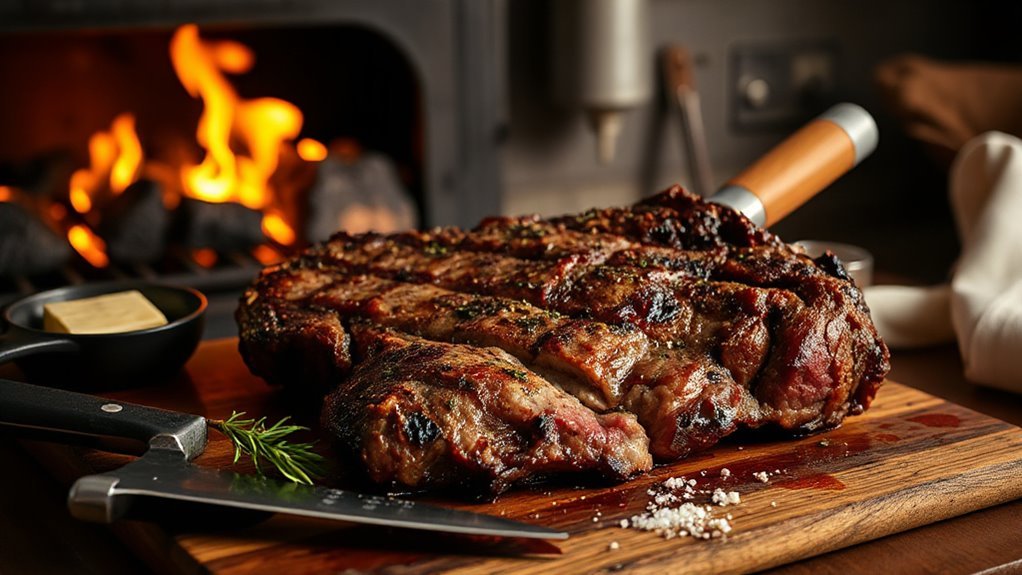
Ever wonder why the reverse‑sear has become the go‑to method for a tomahawk? We love how it lets the massive steak cook evenly, avoiding the dreaded edge‑to‑center temperature gap.
The reverse sear benefits include a gentle, low‑heat phase that renders fat slowly, then a quick, high‑heat blast that forms a caramelized crust without overcooking the interior. It also gives us more control over doneness—something that’s hard to nail with a single‑stage grill.
We’ve tried using a flimsy pan or a cheap electric grill, and that wrong equipment usually leads to uneven heat and a soggy exterior. Instead, we set up a dual‑zone gas grill, keep the bone away from direct flame, and watch the thermometer.
It’s not perfect, but the result feels reliably delicious.
Gather Tools, Ingredients, and Equipment
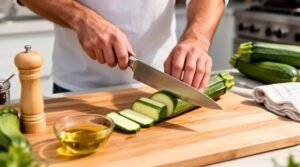
What do we actually need before we fire up the grill for a tomahawk? We’ll want a sturdy, long‑handled tongs set, a reliable instant‑read thermometer, and a heavy‑duty grill brush for cleaning. A cast‑iron skillet works well for the final sear, and a sturdy cutting board plus a sharp chef’s knife are essential for slicing later. For grilling safety we should keep a fire extinguisher nearby and wear heat‑resistant gloves. Equipment durability matters, so we favor stainless steel tools that won’t warp under high heat. A meat‑injection syringe isn’t necessary now, but a simple oil brush and a bowl of kosher salt are handy. Finally, a sturdy grill with dual‑zone capability ensures we can control indirect heat without compromising safety.
Prepare the Tomahawk Steak: Dry‑Brine, Oil, and Season
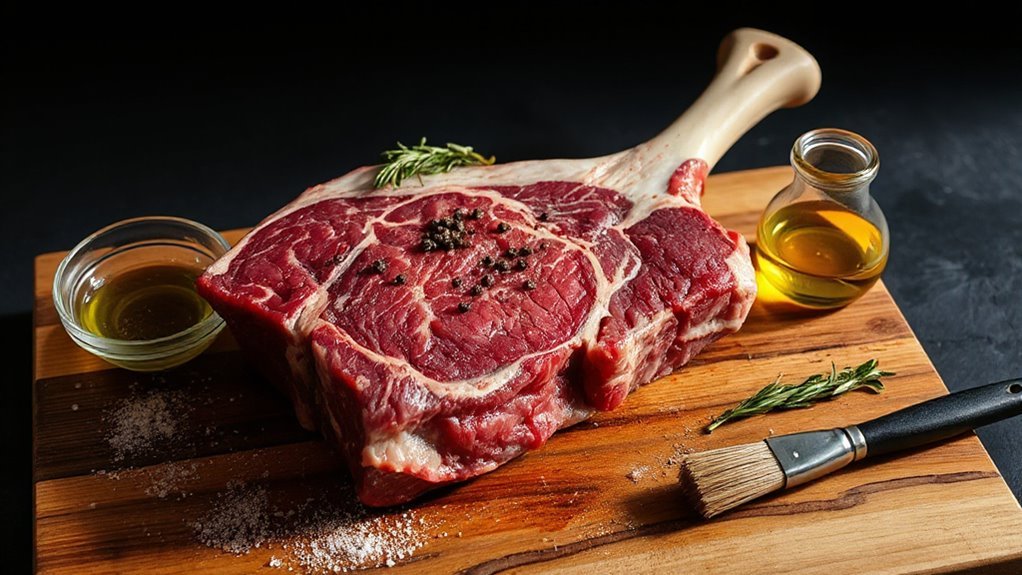
We start by letting the tomahawk sit out for about an hour, preferably a little longer if the kitchen’s a bit chilly—this helps it come to room temperature and makes the seasoning stick better. Then we pat it dry, because moisture would interfere with the dry brine we’re about to apply. A generous hand of kosher salt is sprinkled over the meat, and we let it rest uncovered, allowing the salt to draw out moisture and then re‑absorb it, which intensifies flavor and improves texture. After the brine period, we drizzle olive oil evenly across the surface, ensuring the later spice rub adheres. Finally we season with pepper, garlic powder, and perhaps a hint of smoked paprika, adjusting to taste. This layered approach gives us a flavorful, well‑balanced crust.
Set Up the Grill for a Tomahawk Reverse‑Sear
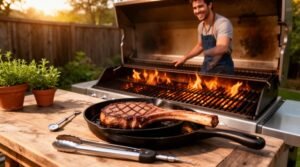
After the steak’s dry‑brine and oil‑seasoning are set, we turn our attention to the grill, because a good reverse‑sear starts with the right heat zones. We fire up the two outer burners to a steady 250 °F, creating an indirect zone that’s gentle enough for the meat to cook evenly. Then we light the middle burner high, giving us a direct‑heat side for the final sear. A smoker tube with a handful of wood chips sits over the hot burner, adding a subtle aroma without overwhelming the flavor. This grill setup lets us blend techniques mix—low‑and‑slow on one side, high‑heat blast on the other—so we can control the crust and the interior precisely. We place the steak bone‑side away from the flame, just in case it scorches.
Cook the Steak Low and Slow Until 110‑120°F Internal Temp
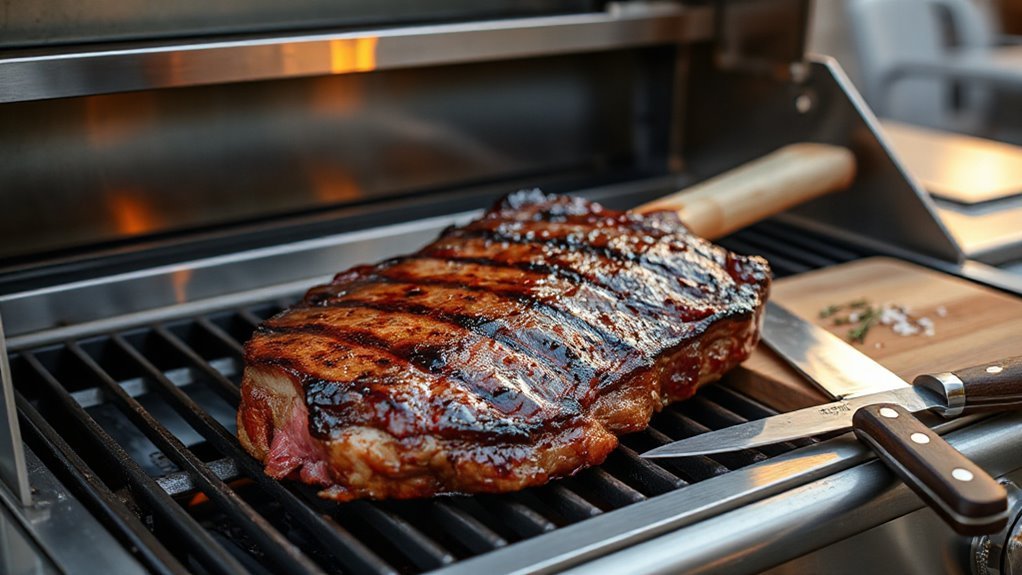
Ever wonder how the low‑and‑slow phase actually shapes a tomahawk? We let the meat sit on indirect heat while the grill hovers around 250 °F, trusting the gradual rise to keep fibers tender. The probe reads 110‑120 °F before we flip to sear, which is the sweet spot for a perfect medium‑rare after the final blast. We watch the clock, flip at about 25 minutes, and keep the lid closed; the smoke from the wood chips adds a subtle depth. It feels almost meditative, though we’re still checking every few minutes—perhaps a little impatient, but that’s part of the ritual.
| Time (min) | Internal Temp (°F) | Action |
|---|---|---|
| 0‑20 | 90‑100 | Place steak on indirect side |
| 20‑45 | 105‑110 | Flip once, keep lid closed |
| 45‑60 | 110‑120 | Target for reverse sear |
| 60‑70 | 115‑125 | Ready for high‑heat finish |
Rest the Tomahawk Steak, Butter‑Baste, and Slice
The grill finally cools down, and we pull the tomahawk off the heat, still glowing with that caramelized crust. We let it rest on a board for ten to fifteen minutes, tented loosely with foil, because the juices need time to redistribute. While it rests we melt butter, toss in minced garlic, rosemary, and a pinch of thyme—then we spoon the herb‑butter over the meat, letting it soak in. After resting we slice against the grain, thick enough to feel satisfying but thin enough for easy eating.
For tips pairing we recommend a robust red wine or a smoky bourbon cocktail. As for plating inspiration, arrange the slices on a wooden platter, drizzle extra butter, and garnish with fresh herbs for a rustic yet refined look.
Frequently Asked Questions
Should I Use a Charcoal Grill for a Reverse‑Sear Tomahawk?
We’d say yes—charcoal adds smoky depth and a richer grill texture for reverse searing, but a gas grill can still deliver excellent results if you prioritize convenience over that extra flavor.
How Thick Should the Tomahawk Be for Optimal Cooking?
We recommend a thick‑cut tomahawk, about two inches – the bone‑to‑meat ratio stays juicy, and the mass lets us achieve an even sear while the interior cooks gently, delivering perfect texture.
Do I Need to Trim the Fat Cap Before Grilling?
We recommend trimming excess fat for grill safety, but leave a thin layer for flavor and moisture; this prevents flare‑ups while preserving the steak’s juiciness, giving you a perfect, controlled sear.
Can I Cook the Steak Without a Probe Thermometer?
Think of the steak like a sunrise—yes, you can cook it without a probe, but we recommend a gas grill for reverse sear; charcoal isn’t necessary, yet it adds smoky depth if you prefer.
What Side Dishes Pair Best With a Grilled Tomahawk?
We recommend roasted potatoes, grilled asparagus, and caramelized carrots as side dishes; include corn on the cob and smoky mushrooms as grilled accompaniments, and pair them with herb‑butter sauces for balanced flavor pairings.