You might not realize that turkey necks actually hold a surprisingly deep, gelatin‑rich flavor that can transform a simple smoke session into something almost luxurious. We usually start by rinsing, patting dry, and then brining them with onions and garlic in broth—this step feels a bit extra, but it really locks in moisture. After a quick smoke at 250°F with hickory and apple chips, we aim for a caramelized bark and an internal 165°F, then let them rest before a brief simmer for extra tenderness. A splash of bourbon at the end is optional, yet it adds a subtle warmth that pairs well with classic soul‑food sides and a rich gravy. Let’s explore how each of these stages contributes to the final bite.
Prepare Turkey Necks for Smoked Cooking
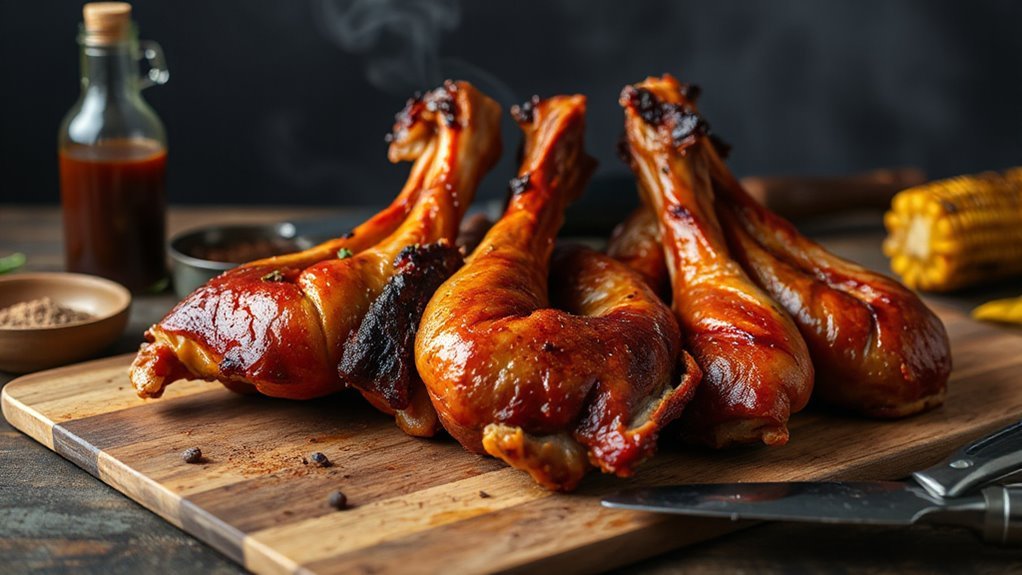
Ever wondered how to get those smoked turkey necks ready without turning the kitchen into a mess? We start by rinsing the necks under cool water, then patting them dry with paper towels—simple but essential for neck tenderness.
Next, we toss the pieces into a large bowl or zip‑lock bag and add coarsely chopped onions and crushed garlic; the aromatics will seep in during cooking.
We pour in enough water or broth to fully submerge the meat, which helps keep the smoked turkey juicy. After a quick stir, we let the mixture sit for a few minutes, maybe longer if we’ve time, allowing flavors to mingle.
Finally, we transfer everything to a heavy‑bottomed pot, ready for the next step.
Smoke the Turkey Necks to Perfection
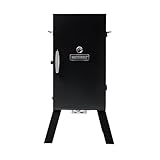
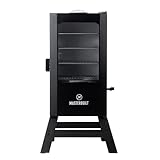
After we’ve rinsed, patted dry, and let the necks soak in that aromatic broth, it’s time to fire up the smoker. We preheat it to 250 °F, using a mix of hickory and apple chips for that sweet‑smoky balance, and we arrange the necks on the rack so they’re not touching. It feels like a ritual, watching the smoke curl, and we keep the temperature steady, rotating the pieces halfway through. The goal is a deep, caramelized bark, yet we still aim for an internal temperature of 165 °F. Sometimes we add a splash of bourbon, perhaps just for the aroma, but we’re careful not to over‑wet the meat. After four hours, we let them rest a few minutes—patience is key before slicing.
Simmer Smoked Turkey Necks on the Stovetop for Extra Tenderness
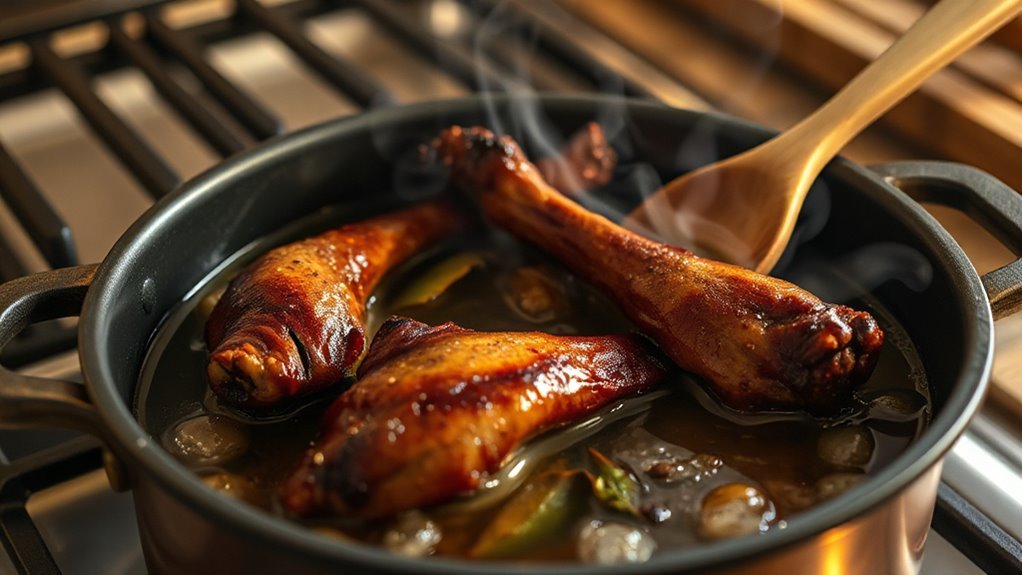
We start by slipping the smoked turkey necks into a pot of simmering broth, and honestly, the aroma that rises is already a promise of tenderness. We keep the heat low, cover with a sliver of space for steam, and let the flavors mingle for an hour and a half. It’s a simple step, yet we pause to check kitchen safety—no splattering, no unattended flames—because an unrelated topic like a phone call can distract us.
| Time | Temperature | Result |
|---|---|---|
| 30 min | Low simmer | Softening |
| 60 min | Gentle bubble | Tender |
| 90 min | Near‑stop | Fall‑off‑bone |
We taste, adjust salt, and notice the broth thickens, a reminder that patience beats haste. The necks finally give, and we feel satisfied, even if we still wonder about that unrelated topic we left for.
Marinate Smoked Turkey Necks and Try Alternate Cooking Methods
What if we let the smoked turkey necks soak up a bold, tangy marinade before we send them to the grill or the slow cooker? We can start by whisking olive oil, Worcestershire, Creole seasoning, a pinch of brown sugar, and a dash of hot sauce. The marinate practicality lies in its simplicity—just toss the necks in a zip‑lock bag, seal, and refrigerate up to 24 hours.
While they’re absorbing flavor, we might consider alternative techniques. Perhaps a quick boil in seasoned broth, then a brief grill for char, or a low‑and‑slow crock‑pot session with onions and thyme. We’ve found that the slow cooker yields melt‑in‑your‑mouth texture, whereas grilling adds a smoky crunch. Either way, we keep the process flexible and the taste exciting.
Make Rich Gravy and Pair Smoked Turkey Necks With Classic Soul‑Food Sides

The flavors we coaxed into the turkey necks during the marinating stage now beg for a sauce that can hold its own, so we turn our attention to a rich, glossy gravy.
We start by deglazing the pan with a splash of chicken stock, scraping up those caramelized bits, then whisk in a roux of butter and flour until it turns a deep amber.
A splash of smoked paprika and a drizzle of liquid smoke give it that smoky gravy depth we love.
As it simmers, we stir in a dash of Worcestershire and a pinch of thyme, tasting for balance.
For the soul side pairing, we plate the necks beside buttery cornbread, collard greens sautéed with garlic, and a spoonful of that velvety gravy—simple, comforting, and just what a Southern‑inspired meal needs.
Frequently Asked Questions
Can I Use Fresh Turkey Necks Instead of Smoked Ones?
Yes, we can swap smoked necks for fresh necks, but we’ll need to add smoke flavor ourselves—marinate with liquid smoke or smoke them briefly before cooking to achieve that authentic taste.
Do I Need to Brine the Necks Before Smoking?
We say you don’t have to brine, but if you want extra moisture and flavor, follow brining basics—soak in salt water, then let smoke sparks enhance the meat’s tenderness during smoking.
What Wood Chips Give the Best Flavor for Turkey Necks?
We recommend using apple or cherry smoke wood for turkey necks—sweet, mild flavor pairing that complements their richness, while hickory adds a deeper, smoky note if you prefer a bolder profile.
Can I Freeze the Marinated Necks for Later Use?
We can freeze marinated necks, sealing them airtight for up to three months, then thaw them in the fridge before cooking; this preserves flavor and texture while giving you flexible storage duration.
How Long Can Leftovers Be Stored Safely in the Fridge?
Think of leftovers as a gentle tide—keep them cool, and they stay safe. We recommend refrigeration duration of three to four days for turkey neck leftovers, ensuring proper storage and temperature control.