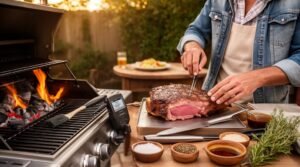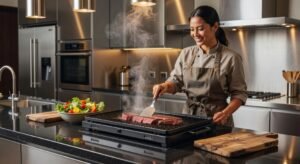
When we tried a 6‑lb prime rib on our backyard grill, the meat was still pink inside after a quick sear, so we let it rest at room temperature, pat it dry, and rub it with olive oil, salt, pepper, rosemary and a pinch of thyme before setting up a two‑zone fire. The indirect side kept a steady 225‑250°F while the hot side gave the crust we wanted, and after about 10‑15 minutes per pound we checked the internal temperature—still a bit of a gamble, honestly. A final high‑heat blast sealed the flavor, then we rested it for twenty minutes, carved against the grain, and tossed a quick pan gravy together. You’ll probably wonder how to balance the sear and the low‑and‑slow without overcooking—let’s explore that.
Prepare the Prime Rib for the Grill: Thaw, Dry, Oil, and Season
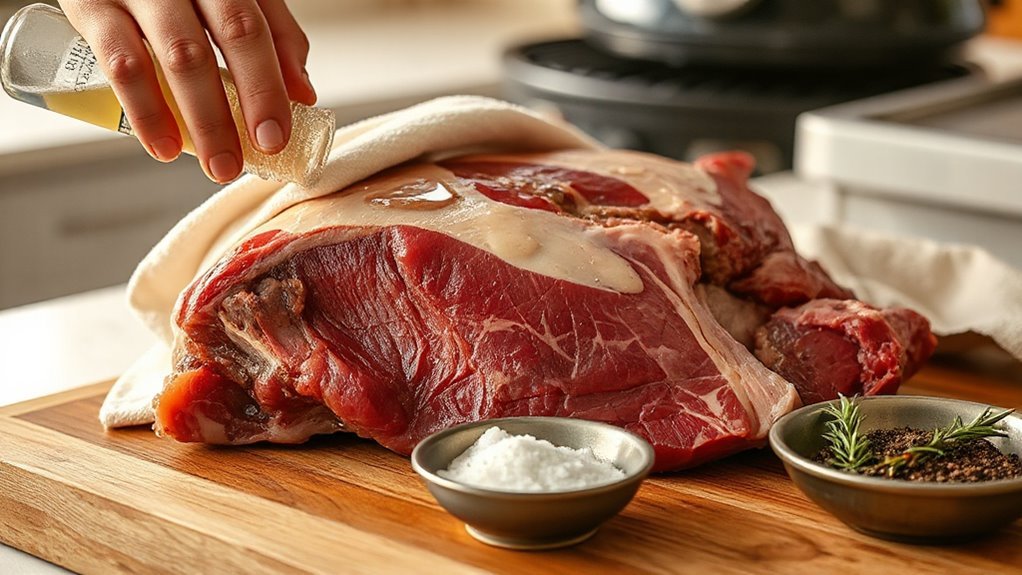
We’ll start by getting the prime rib ready for the grill, and honestly, the first step is just letting it come to room temperature after it’s fully thawed.
We’ve learned a few thawing tips: keep the meat in its original packaging, place it on a tray, and let it sit in the fridge for 24 hours per 5 lb, then move it to the counter for an hour before cooking.
Once it’s warm, we pat it dry with paper towels—this helps the crust form later.
For oil application we drizzle a thin layer of olive oil over every surface, then rub it in; the oil not only prevents sticking but also carries the seasonings.
Speaking of seasonings, we sprinkle salt, pepper, and minced rosemary, maybe a pinch of thyme, making sure each side is covered.
Finally, we let the rib rest briefly while we prep the grill, because a little patience at this stage really pays off.
Set Up a Two‑Zone Grill for Indirect Low‑And‑Slow Cooking
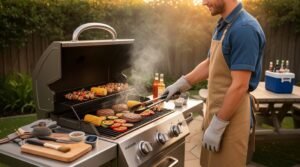
Now that the rib’s seasoned and sitting while we get the grill ready, let’s talk about how to set up a two‑zone fire for that low‑and‑slow cook.
We start by lighting a full charcoal pile on one side, then push the coals to create a hot zone and leave the opposite side empty for indirect heat.
If we’re using a gas grill, we ignite only the left burners and keep the right burners off, then place a drip pan with water under the grate to catch juices and stabilize temperature.
Opening the vents fully gives us better control, and we add a few wood chunks for smoky flavor.
This two‑zone layout lets the rib cook gently, keeping the meat moist while the heat stays around 225‑250 °F.
Sear the Prime Rib on High Heat to Build a Delicious Crust
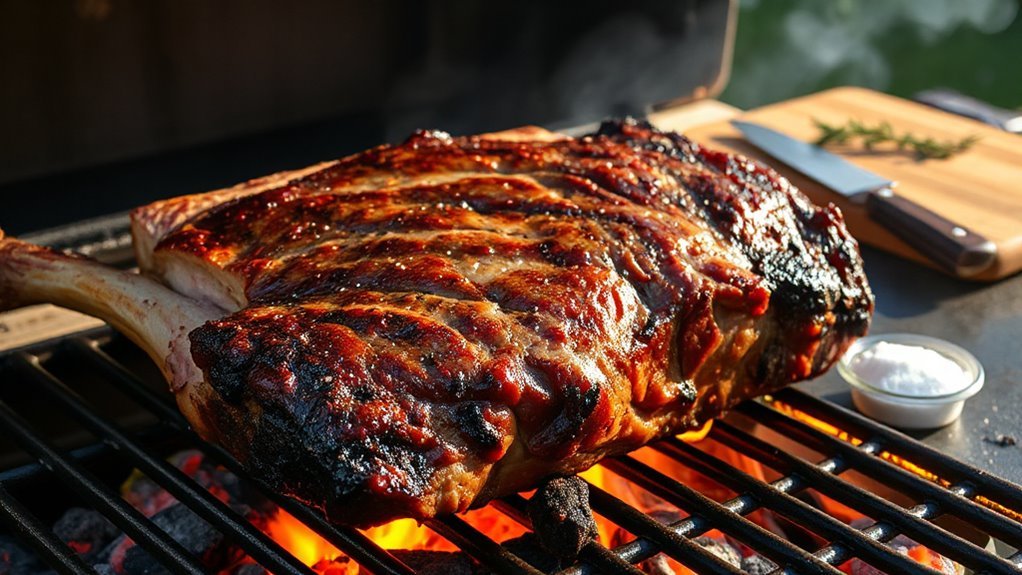
The moment we crank the grill up to a searing 450‑550 °F, the rib starts to sing, and honestly, that sizzle is the part that gets me most excited. We lay the seasoned roast directly over the hottest zone, listening to the background noise of crackling coals while the surface browns. A quick 3‑minute turn each side locks in flavor; we watch the Maillard reaction, then pull it back to let the temperature settle. Some people swear by alternative methods like a cast‑iron sear pan, but we trust the grill’s direct heat for that authentic crust.
| Time (min) | Side |
|---|---|
| 0‑3 | First |
| 3‑6 | Second |
| 6‑9 | Third |
| 9‑12 | Fourth |
| 12‑15 | Final |
We’ll keep the lid closed to trap heat, then move the rib to the cooler zone for the low‑and‑slow phase. This step is simple, yet it feels like a rite of passage for any grill enthusiast.
Cook the Prime Rib (10‑15 min / lb) at 225‑325 °F and Check Internal Temperature
After the crust has set, we slide the rib back to the cooler side of the grill and let the low‑and‑slow work its magic. We keep the temperature between 225 °F and 325 °F, aiming for ten to fifteen minutes per pound. A digital thermometer is our best friend; we insert it into the thickest part, avoiding the bone, and watch the numbers climb. We usually pull the meat when it reads about ten degrees below our target—perhaps 125 °F for rare or 135 °F for medium‑rare. It feels a little like a guessing game, but the steady heat and regular checks keep us on track. The two word “low heat” and two word “steady temperature” guide us, ensuring the rib stays juicy and tender.
Finish the Prime Rib With a Quick High‑Heat Sear for the Final Crust
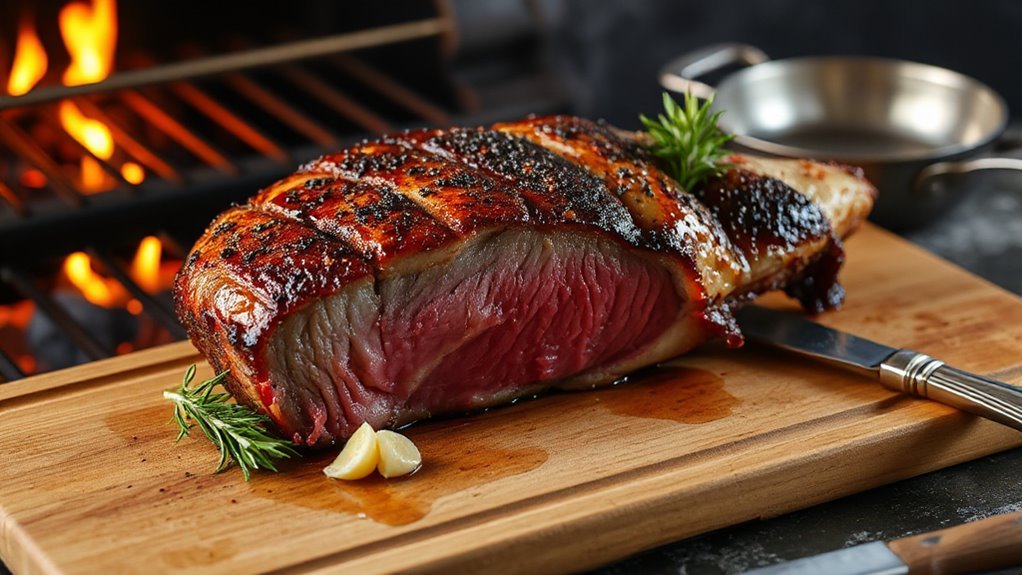
How do we lock in that gorgeous crust without overcooking the interior? We raise the grill to a quick high‑heat sear, but we’re careful not to hit the wrong temperature that could blast the meat. After the low‑and‑slow phase, we let the grill climb to about 475 °F, then sear each side for just a minute or two. If you like a sweet‑savory twist, brush an alternative glaze—perhaps a honey‑soy mix—right before the final turn. The crust forms fast, sealing juices while the interior stays on target.
| Step | Tip |
|---|---|
| Heat | Aim for 475 °F, watch for flare‑ups |
| Time | 1‑2 min per side, lid closed |
| Glaze | Apply alternative glaze at the end for flavor |
Rest, Carve, and Serve the Prime Rib: Timing, Temperature Rise, and Gravy Tips
So, once that beautiful crust is set and the grill finally cools down a notch, we let the rib rest—usually about twenty to thirty minutes, loosely tented with foil.
During this pause the contrast temp rises five to ten degrees, nudging the meat into its final doneness without overcooking.
We keep an eye on the thermometer, because that little rise can be the difference between medium‑rare and medium.
When we’re ready to carve, we slice against the grain, using a simple carving method that starts at the thickest end and works toward the bones, which helps preserve juiciness.
For the gravy, we deglaze the pan with beef broth, whisk in butter and a splash of red wine, then let it thicken.
It’s not perfect, but it’s satisfying.
Frequently Asked Questions
Can I Use a Gas Grill Instead of Charcoal for This Method?
We’ll say yes—gas grilling works fine, just treat the burners like a controlled sun, using direct heat for the sear and low, steady flame for the slow roast, ensuring flavor stays bright.
Should I Brine the Rib Before Seasoning?
We think brining helps retain moisture and adds subtle flavor, so we recommend it; then the dry seasoning creates a tasty contrast, giving the rib a juicy interior and a bold, seasoned crust.
What’s the Best Way to Keep the Meat Moist During Low‑And‑Slow Cooking?
We keep it juicy by draping a water‑filled pan beneath the rib, sealing the grill, and basting occasionally—moisture retention thrives with these low‑and‑slow strategies, ensuring tender, flavorful meat.
How Do I Know When the Roast Is Done Without a Thermometer?
We’ll feel the roast’s firmness, watch the crust formation, and trust the indirect grilling heat; when the meat yields slightly under pressure and the crust is deep brown, it’s done.
Can I Add a Rub With Sugar Without Burning the Crust?
We liken the roast to a sunrise, its glow tempered by a sugar rub; yes, we can add a sweet crust without burning, as long as we keep heat modest and watch the crusts closely.