We’ll start by picking the charcoal that feels right—lump for quick heat, briquettes for steady burn, or a blend if you’re not sure. Light it in a chimney starter, wait for that gray ash, then give the grill ten to fifteen minutes to preheat while we brush the grate clean. Once the vents are open and the lid thermometer shows a stable temperature, we can set up zones, direct for searing, indirect for slower cooks, and tweak the airflow as needed. It’s a bit of a dance, but that’s what makes the whole process feel rewarding, and we’ll see how the flavors develop as we go.
Choose and Light the Right Charcoal
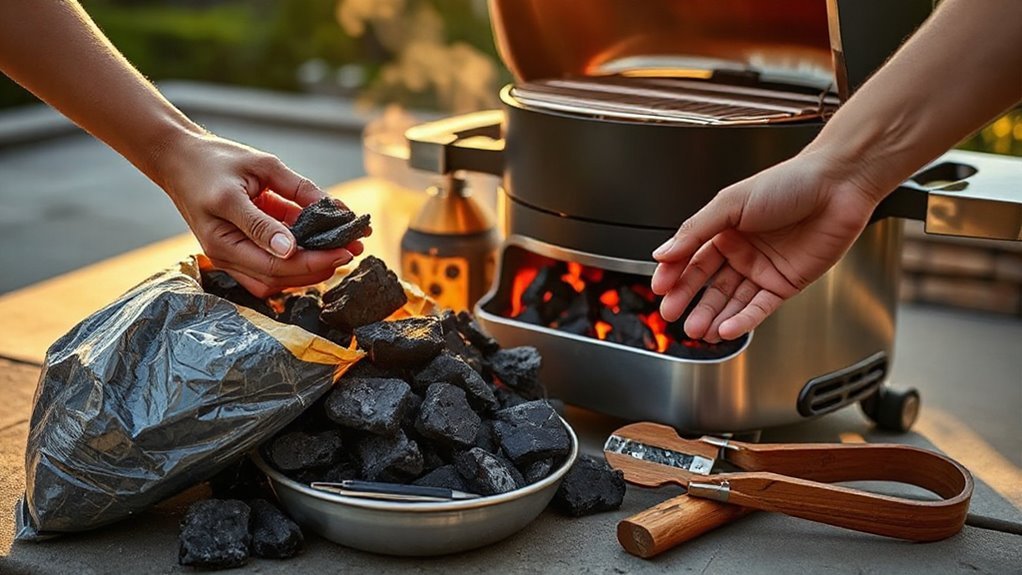
Choosing and lighting the right charcoal is a bit like picking a good coffee blend—there’s a lot of nuance, and you’ll probably end up experimenting a little.
We start by looking at charcoal types: lump, briquettes, or a blend. Lump burns hotter and faster, while briquettes give steadier, longer heat. Sometimes we mix them, hoping to capture the best of both worlds.
Next, we set up the chimney starter, because it’s the easiest way to get an even flame without torching. We crumple a newspaper, place it at the bottom, fill the tube three‑quarters full for quick cooks, or all the way for a marathon session.
After fifteen minutes the coals are glowing, covered in white ash, and we’re ready to pour.
The vents stay open, letting air flow, and we watch the flames shoot from the top—signs that the fire is truly ready.
Preheat the Grill and Prepare the Cooking Grate
We’ll start by letting the grill warm up for about ten to fifteen minutes with the lid on and all the vents wide open. While it heats, we can check the charcoal, making sure it’s evenly spread and the ash is just beginning to form. A quick preheating tip: keep the lid closed after the initial warm‑up; this traps heat and steadies the temperature. When the grill reaches a steady glow, we pull out the cooking grate—using gloves, of course—and give it a brisk brush. Grate cleanliness matters; any residue can cause flare‑ups and ruin that sear. After brushing, we replace the grate, adjust the vents if needed, and let the surface sit a moment longer so it’s truly hot and ready.
Pick the Right Heat Zone Setup for Your Charcoal Grill
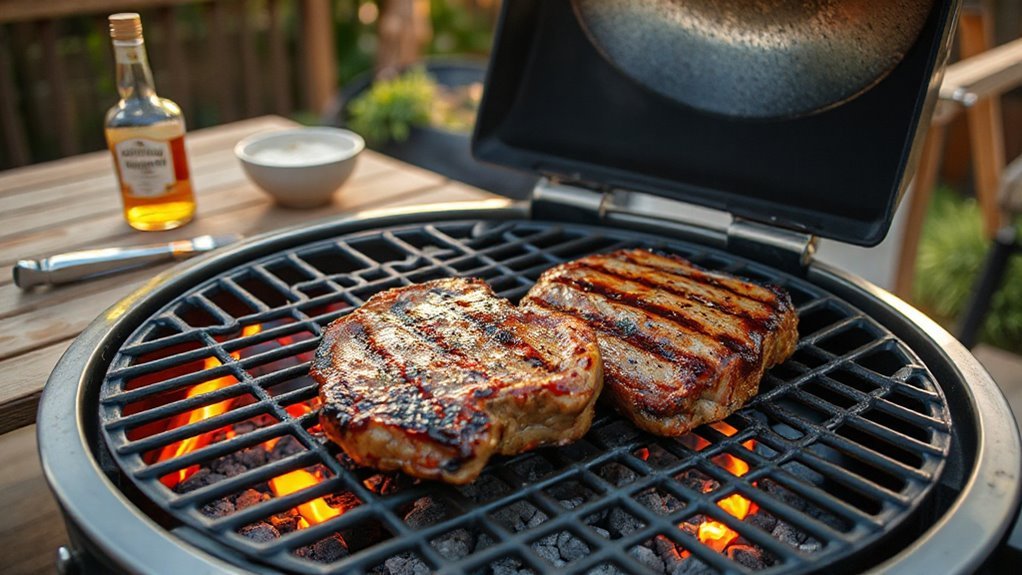
Ever wonder which heat zone layout will actually make your steaks sing and your veggies stay crisp? We’ve tried single‑zone, two‑zone, and three‑zone setups, and each brings its own two word discussion ideas about control and flexibility.
A single zone spreads heat evenly, perfect for quick burgers, but you lose that cooler side for slower cooks.
Two zones give you a hot sear area and a cooler zone for finishing, so we often pile coals on one side and leave the other empty.
Three zones add a sloped middle, letting us juggle high‑heat searing and low‑heat smoking at once.
The key is to match the zone to the food, then adjust vents and charcoal as needed.
It’s not a strict rulebook, just a practical guide.
Master Direct vs. Indirect Cooking on a Charcoal Grill
Grill master, the heat of a charcoal grill can be a bit of a love‑hate relationship: direct heat gives you that instant sear we all crave, while indirect heat lets the food cook through without turning into a charcoal‑scented disaster. We start with ultra lighting, letting the coals glow under a blanket of white ash, then we practice ash management to keep the fire steady.
| Method | Ideal Use |
|---|---|
| Direct | Steaks, burgers, quick sears |
| Indirect | Roasts, whole poultry, slow‑cook |
| Mixed | Veggies that need char and tenderness |
| Two‑zone | Searing on hot side, finishing on cool side |
Fine‑Tune Temperature With Vents and a Thermometer
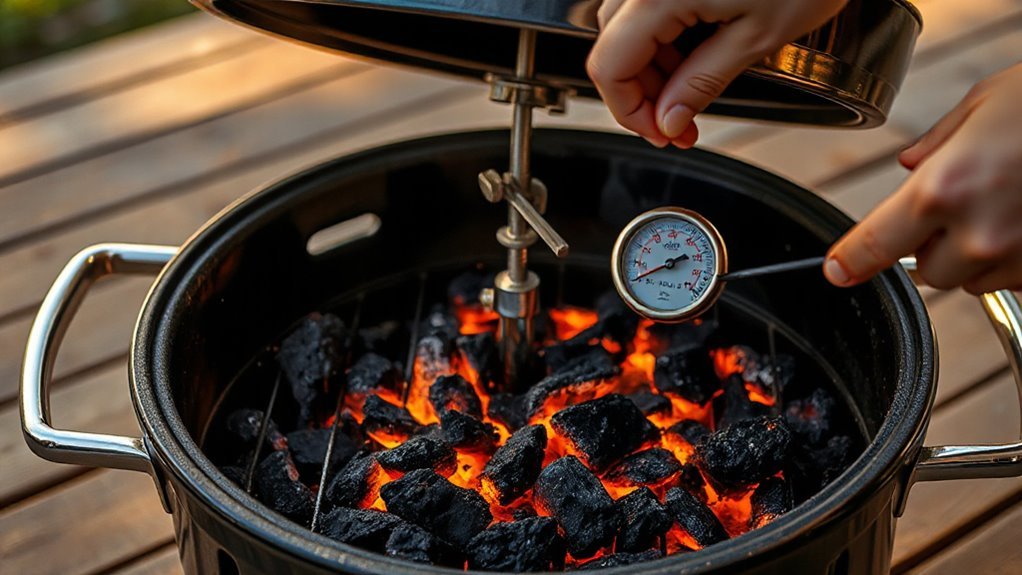
After we’ve sorted out whether we’re cooking direct, indirect, or a mix, the next step is getting the temperature just right, and that’s where the vents and a thermometer become our best friends.
We start with vent management: opening the top vent a little lets oxygen feed the coals, raising heat quickly, while closing it throttles the flame for slower cooking.
A reliable thermometer tucked on the lid gives us real‑time feedback, so we can tweak the vents without guessing.
Sometimes we over‑adjust, then realize a small tweak is enough—perhaps a half‑inch change.
Good vent control also boosts fuel efficiency, because we’re not constantly adding fresh charcoal to compensate for heat loss.
In practice, we watch the gauge, adjust, and let the grill settle, balancing heat and fuel use.
Season, Sauce, and Double‑Check Food Safety Before You Eat
Do we really need to overthink the final steps before we dig in? We usually do, especially when seasoning alternatives and grilling safety matter. Let’s walk through a quick checklist while we keep the mood relaxed.
| Step | Reminder |
|---|---|
| 1 | Pat food dry, then apply salt, pepper, or a dry rub. |
| 2 | Brush on sauce near the end to avoid burning. |
| 3 | Check internal temperature with a probe. |
| 4 | Let meat rest; juices redistribute. |
| 5 | Verify no cross‑contamination on utensils. |
We often wonder if a dash of smoked paprika is enough, or perhaps a citrus‑herb mix would shine. We double‑check that the grill is clean, that the meat hit safe temperatures, and that we’ve let it rest. It feels a bit redundant, but it’s better safe than sorry.
Frequently Asked Questions
How Long Can I Reuse Leftover Charcoal?
We can reuse leftover charcoal for a few more sessions if it’s still glowing and covered in white ash; just store it in a dry, wind‑safe grill box to preserve heat and prevent moisture.
Can I Grill in Windy Conditions Safely?
We say you can grill in windy conditions safely if you check wind safety and wind speed considerations first—keep gusts under fifteen miles per hour, shield the fire, and monitor the temperature closely.
What’s the Best Way to Clean Ash From the Grill?
We recommend letting the coals cool completely, then using a metal ash pan for safe ash disposal. Keep the chimney starter away from any flammable material while cleaning, and wear gloves for protection.
Do Different Charcoal Brands Affect Flavor?
We’ve found different charcoal can change flavor impact, especially if you use hardwood lump versus briquettes; the smoke’s intensity and subtle notes vary, so choosing the right type tailors your grill’s taste.
How Do I Prevent Flare‑Ups Without Moving Food?
We keep a drip pan under the food, spread a thin layer of oil on the grate, and close the lid to limit oxygen; this controls grill temps and prevents flare‑ups without moving anything.