We’ll start by cutting the lobster tails lengthwise, keeping the thin membrane intact so the meat stays together, then brush them with olive oil, salt, and pepper. I think a two‑zone grill at 450–500°F works best—direct heat for a quick sear, indirect for gentle cooking. After a 5‑6‑minute sear flesh‑side down, we’ll baste with garlic‑herb butter, flip, and finish with a splash of lemon. The goal is a juicy texture and an internal temp around 135–140°F, though we’ll tweak the timing a bit as we go.
Cut & Season Lobster Tails for the Grill
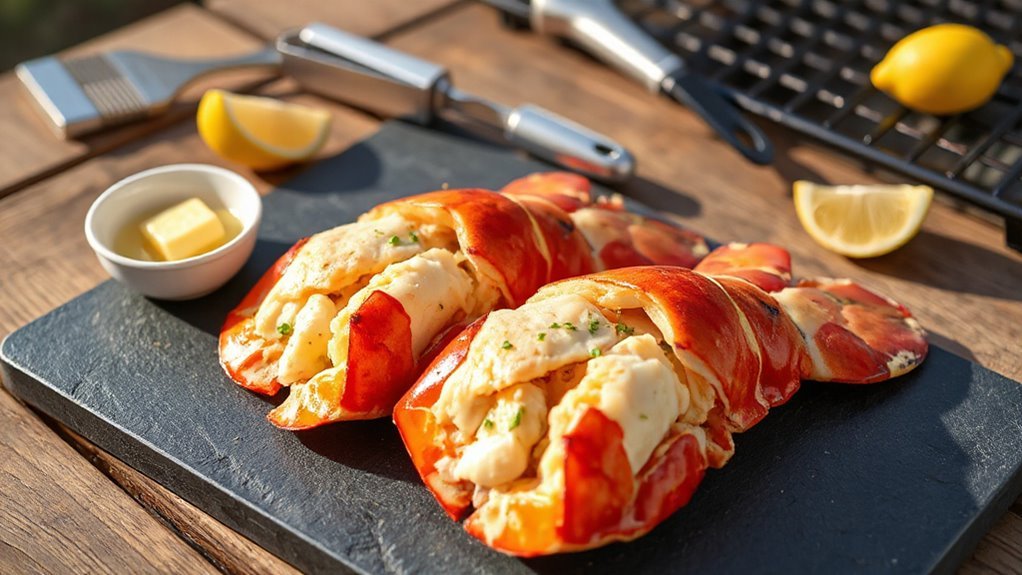
Ever wonder how to get that perfect grill‑ready lobster tail without turning it into a rubbery mess? We start by cutting the shell down the back with kitchen shears, being careful not to slice through the meat. Then we split the flesh along the cut line, opening the tail like a book while the thin membrane holds the sections together. We brush the exposed meat with olive oil, letting it soak in a little sea salt and cracked black pepper—maybe a dash of seafood seasoning if you like.
As captain’s tips suggest, watch the shell to tail ratios; a larger shell protects the meat and helps keep it juicy.
Finally, we let the tails rest for a minute, letting the flavors settle before they hit the grill.
Set Up Your Grill for Grilled Lobster Tails
How do we get the grill ready for lobster tails without turning the whole thing into a kitchen circus? First, we light the charcoal or fire the burners and let them reach a steady medium‑high temperature, about 450‑500°F. While the heat builds, we arrange the coals to one side, creating an indirect heat zone for those moments we want a gentler cook.
I think a simple grill setup like this works best: place a drip pan under the indirect area, toss in a few apple wood chunks if you like smoke, and close the lid for a minute to let the temperature settle. Then we move the tails onto the direct side for the initial sear, but keep the indirect zone ready for the finish. This balance of direct and indirect heat gives us control without fuss.
Cook the Flesh Side Down: Sear for 5‑6 Minutes
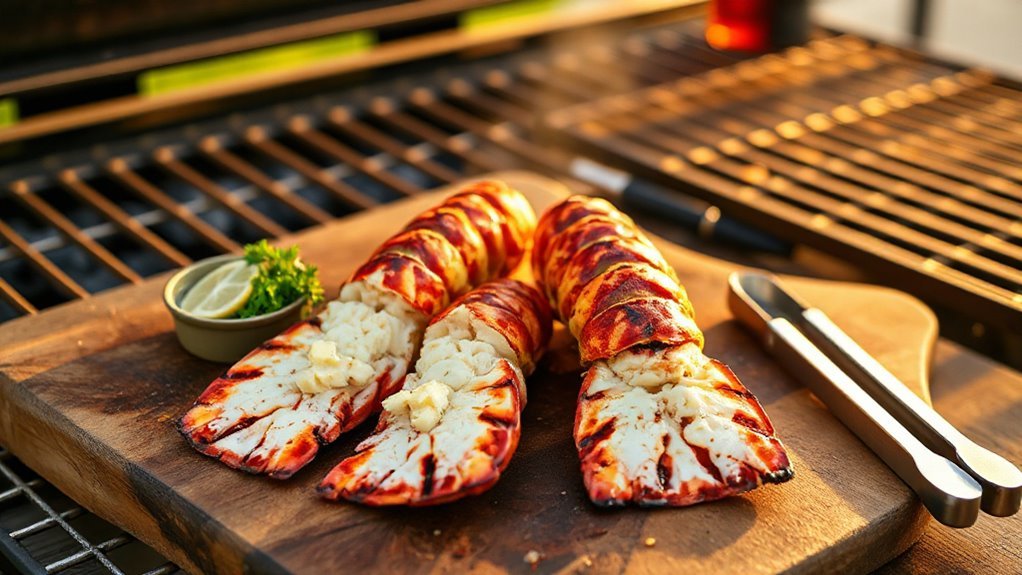
When we lay the lobster tails flesh‑side down on the grill, the first thing we notice is how quickly the heat starts to caramelize the meat, giving it that golden‑brown edge we’re after. We let them sit undisturbed, trusting the grill timing to work its magic. A quick glance shows the shells turning a vivid red, and the scent of butter baste drifting up. It feels almost meditative, though we’re aware we must keep an eye on the clock.
- Preheat to 450‑500 °F.
- Place tails flesh side down.
- Sear 5‑6 minutes, no flipping.
- Brush with butter baste halfway through.
The result is a fragrant, slightly crisp crust that promises juicy interior.
Flip, Baste, and Finish for Juicy Results
So, after that fragrant sear, we gently flip the tails and start basting—because, honestly, a little extra butter can be the difference between “just okay” and “wow, that’s juicy.” We usually brush the meat side with a garlic‑herb butter, letting it melt into the cracks while the grill’s heat does its thing; I think the aroma alone makes the kitchen feel like a seaside tavern.
We keep a close eye on flame management, lowering the heat just enough to let the butter sizzle without burning. The shell protection continues to shield the delicate flesh, allowing the butter to soak in while the grill does its work. A quick squeeze of lemon, a few extra brush strokes, and we close the lid, letting the steam finish the job. It’s a simple step, yet it makes all the difference.
Check Doneness and Temperature
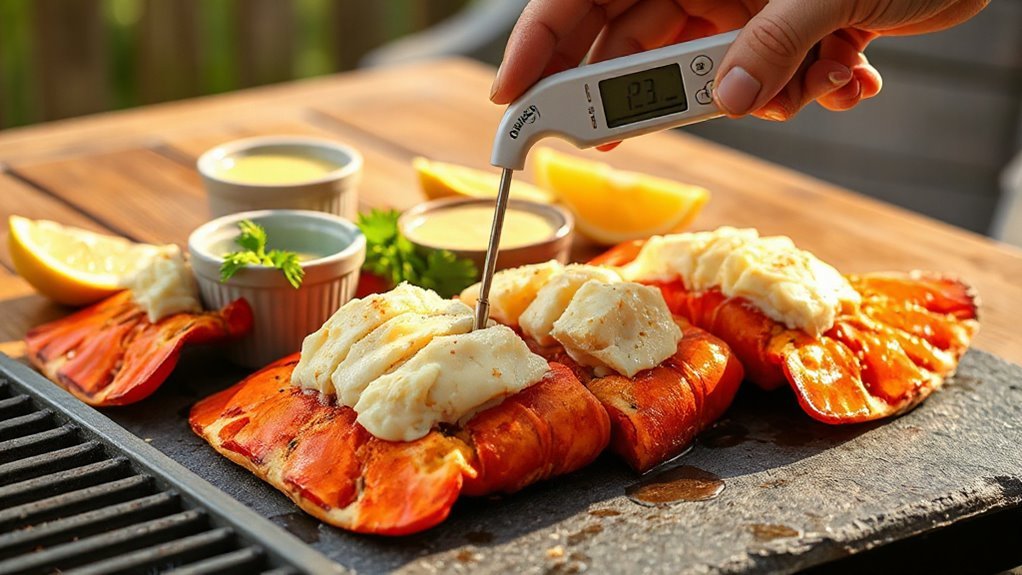
We’re at the point where the meat’s color and temperature tell the story, and honestly, it’s a little like guessing the ripeness of a peach—there’s a science to it, but also a gut feeling. A quick doneness check is essential; we look for opaque flesh and a bright‑red shell, then confirm with an instant‑read thermometer. The temperature targets are narrow, so we don’t want to guess. Here’s what we keep in mind:
- Insert the probe into the thickest part of the tail.
- Aim for 135‑140 °F for a perfectly grilled tail.
- If you’re smoking, let it climb to about 145 °F.
- Remove from heat as soon as the reading hits the target—overcooking makes it rubbery.
We usually trust the visual cue, but the thermometer removes doubt.
Butter‑Herb‑Citrus Bastes for Grilled Lobster Tails
Ever wonder why a simple butter‑herb‑citrus glaze can turn a grilled lobster tail from good to unforgettable? We start by melting butter, then stir in chopped thyme, parsley, and a pinch of garlic. A splash of orange or lemon juice—our citrus pairing—brightens the mix, and a little zest adds texture. We brush this butter baste ideas onto the flesh side while it cooks, letting the heat melt the butter into the meat.
After flipping, we repeat, perhaps adding a dash more citrus for balance. The sauce caramelizes slightly, giving a glossy finish. It’s not just flavor; the acidity helps keep the lobster tender, and the herbs lend a fresh aroma that makes each bite feel like a celebration.
Fix Common Grill Problems and Keep Lobster Tender
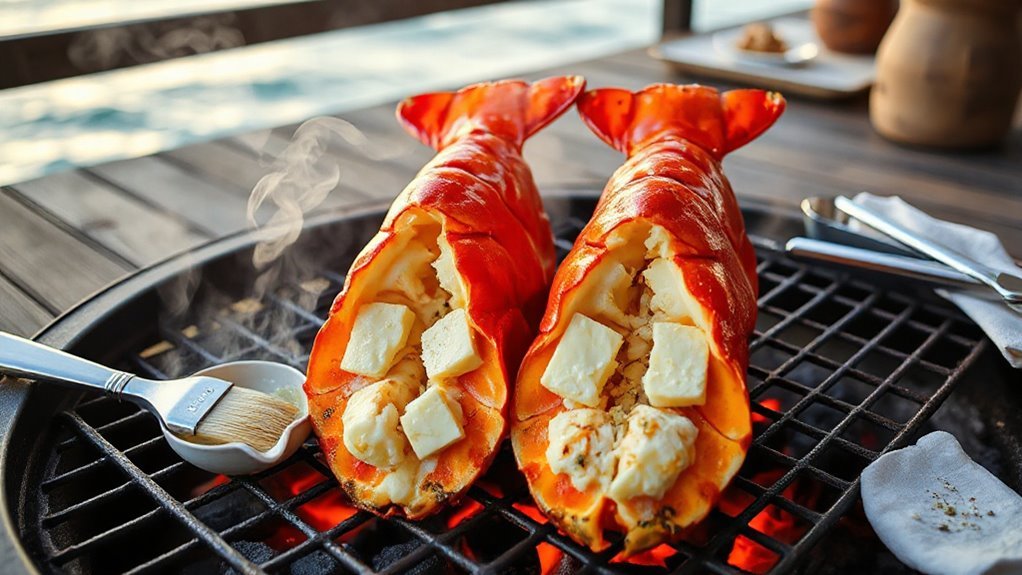
Ever wonder why a perfectly grilled lobster tail can turn rubbery in a minute? We’ve all been there—overcooking, uneven heat, or a slip in seafood handling can ruin the delicate texture. Let’s walk through the fixes while keeping grilling safety front‑and‑center.
- Monitor temperature closely – Use an instant‑read probe; pull the tail at 135 °F to avoid rubbery meat.
- Maintain consistent heat – Set up a two‑zone grill; indirect heat prevents flare‑ups that scorch the shell.
- Mind the butter – Brush lightly; excess oil can cause flare‑ups and uneven cooking.
- Handle with care – Keep the lobster chilled until just before cooking, and use tongs to avoid puncturing the meat.
Frequently Asked Questions
Can I Use Frozen Lobster Tails Directly on the Grill?
We can’t just toss frozen tails onto the grill; we must thaw them first for grilling safety, ensuring even cooking and preventing sudden temperature shocks that could cause uneven, rubbery meat.
Do I Need to Pre‑Boil Tails Before Grilling?
We say no—skip the pre‑boil and let the grill’s heat paint the shells with caramelized flame, then sear flesh‑side down, flip, baste, and watch the meat turn opaque, juicy perfection.
What Type of Wood Smoke Pairs Best With Lobster?
We think apple wood smoke gives the best flavor pairing for lobster, offering a sweet, subtle aroma that complements the shellfish without overwhelming it, and it works beautifully on the grill.
How Do I Prevent the Meat From Sticking to the Grill?
We prevent sticking by brushing the grill grates with oil, pre‑heating them, and lightly oiling the lobster meat; these grilling tips keep the flesh from adhering while delivering a perfect sear.
Can I Grill Lobster Tails Without a Thermometer?
We can skip the thermometer by watching cooking timing and feeling the grilled flavor develop; when the flesh turns opaque, shells brighten, and a firm bite appears, you know it’s perfectly done.