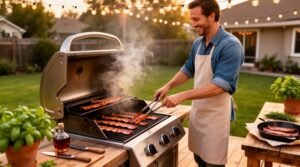
We’ll start by heating the grill to a gentle 350 °F, letting the coals glow just enough for that thin ash layer, then we’ll set up an indirect zone—maybe turn off one burner or push the bacon away from the flame. Pat the strips dry, sprinkle a little pepper if you like, and decide whether to use a foil pan, a cast‑iron skillet, or just the grates. The trick is flipping halfway and watching the grease collect, which gives us that perfect crisp without the mess. You’ll see why a wire rack can make a difference, and the next step will show how to avoid the common soggy‑bacon pitfall.
Choose the Best Grill Setup to Grill Bacon
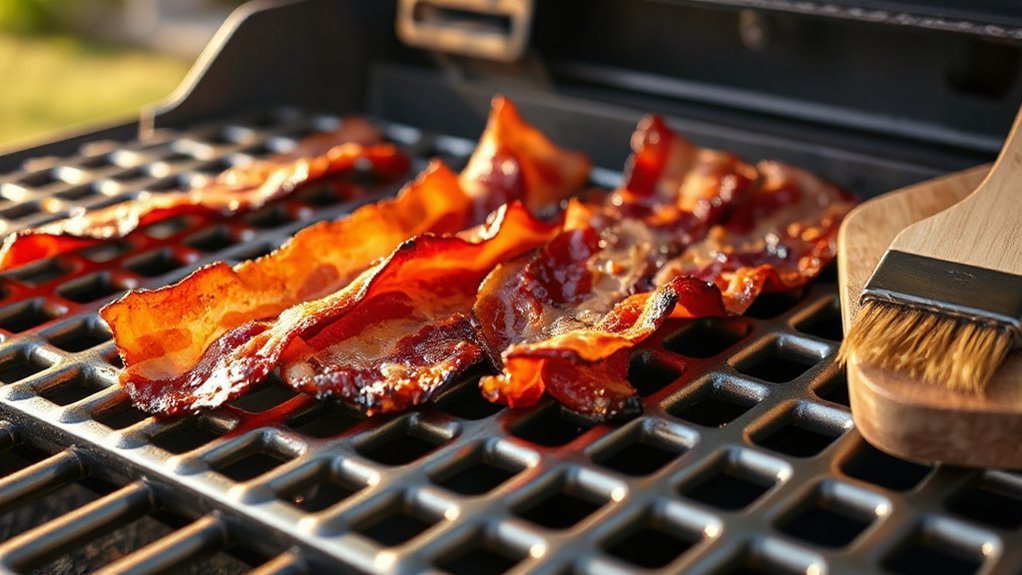
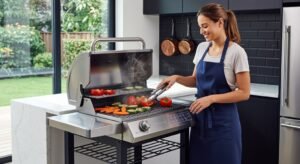
Ever wonder which grill setup will give you the best bacon without turning your backyard into a smoke‑filled kitchen? We’ve tried a few configurations and learned that a steady grill temperature is the cornerstone of bacon safety. First, we preheat to about 350°F, giving the coals a gentle glow and a thin ash layer—this keeps flare‑ups under control. Next, we create an indirect heat zone by turning off one burner or moving the bacon away from direct flames; that way the grease drips without igniting. We also clean the grates, because residue can cause unwanted smoke and affect flavor. If you’re using a cast‑iron pan, place it on the grates and close the lid, flipping halfway. This approach balances crispness with safety, and it’s flexible enough for both thin and thick‑cut slices.
Prep Your Bacon and Pick a Cooking Method
How do we get that perfect bacon texture before it even hits the grill? First we prep bacon by patting each strip dry, trimming excess fat if we like, and maybe sprinkling a pinch of pepper. Then we think about choosing method—direct grate, foil pan, or skillet—each gives a different crispness and smoky note. We’ll test a few, because honestly, we’re not sure which will win for our taste buds today.
| Method | Heat Type | Approx. Time |
|---|---|---|
| Direct Grate | Medium‑low (300‑325°F) | 6‑10 min per side |
| Foil Pan | Medium (350°F) | 10‑15 min total |
| Skillet | Medium (350‑400°F) | 8‑12 min total |
We’ll keep the lid closed, flip halfway, and watch for flare‑ups. It’s a bit of trial and error, but that’s part of the fun, right?
Cook Bacon in a Grill‑Safe Pan for Even Browning
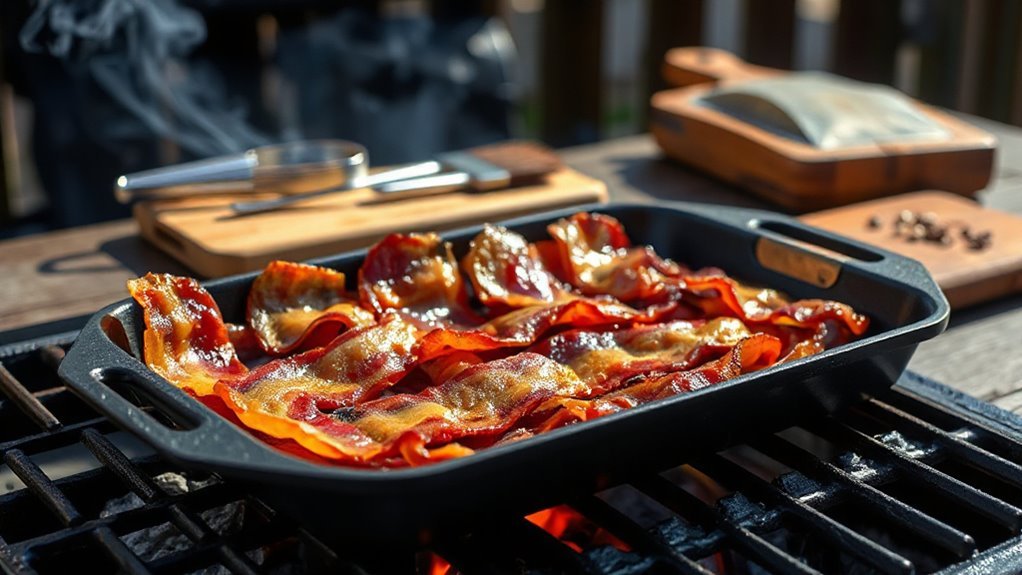
A grill‑safe pan is probably the easiest way to keep bacon from slipping off the grates and still getting that even, caramelized brown we all love. We set the grill to medium, about 350 °F, and create an indirect heat zone so the pan sits over a cooler spot, preventing flare‑ups while the fat renders. Then we lay the strips in a single layer, close the lid, and let the pan browning happen naturally—no need to flip constantly.
- Preheat grill, establish indirect heat.
- Place pan, arrange bacon, close lid.
- Cook 8‑12 minutes, flip halfway, watch for crispness.
We’ve found this method gives consistent color and texture, though sometimes we’ll let it sit a minute longer if it looks a bit pale. The result is reliably tasty, even if timing varies slightly.
Capture Grease With a Foil Pan While Grilling Bacon
After we’ve shown how a grill‑safe pan keeps the bacon from slipping and gives us that steady, caramelized brown, we often find ourselves reaching for a simple foil pan to tackle the messier side of things.
We lay the foil pan on the grates, shape it to fit, and set it over indirect heat so the drippings collect without igniting. The pan catches the grease, which means fewer flare‑ups and an easier cleanup later—something we all appreciate after a long cookout.
We usually preheat to about 350°F, then lay the strips in a single layer, close the lid, and let them sizzle for ten to fifteen minutes.
It’s not perfect; sometimes the bacon sticks a bit, but overall the foil pan does the trick.
Grill Bacon Directly on the Grates for Smoky Crunch
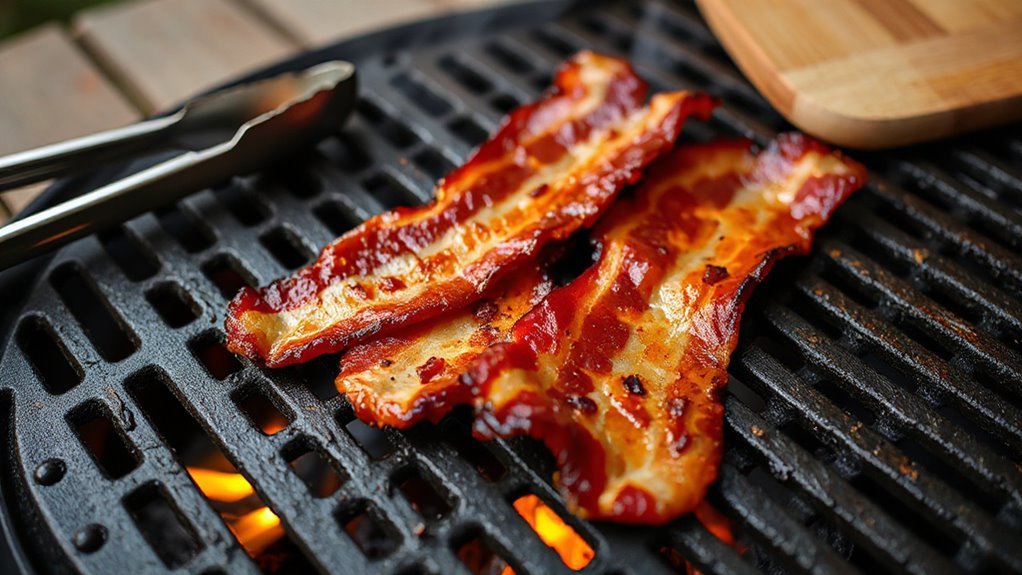
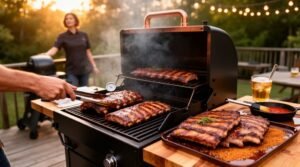
Smoking the bacon directly on the grates gives us that unmistakable, crunchy bite we all crave, and it’s surprisingly simple once we get the heat right. We preheat to about 300‑325°F, then lay the strips perpendicular to avoid slipping. The key is watching the bacon texture change from soft to crisp; a little patience with grill timing makes all the difference. Here’s how we manage it:
- Heat control – keep the zone steady, shifting to cooler spots if flare‑ups appear.
- Flip gently – after 6‑8 minutes per side, turn with tongs to preserve the edges.
- Finish – once the edges curl and the surface cracks, remove immediately to prevent over‑cooking.
We often find the aroma drifts over the whole patio, and that smoky crunch is worth the occasional extra minute.
Why a Wire‑Rack Sheet Gives Bacon Perfect Texture
Ever wondered why a simple wire‑rack sheet can turn ordinary grilled bacon into something almost bakery‑like in texture? We’ve found that lifting the strips off the grill surface lets fat drip away, preventing soggy bottoms while the hot air circulates. In our two word discussion ideas we focus on “air flow” and “heat distribution,” which are core to texture science. The rack creates a mini‑convection chamber, so each slice crisps evenly.
| Feature | Effect |
|---|---|
| Elevation | Reduces sogginess |
| Even heat | Promotes uniform crunch |
| Drip collection | Keeps surface dry |
We notice the crackle is louder, the bite more satisfying. Sometimes the rack feels a bit flimsy, yet the result usually outweighs that minor inconvenience.
Fix Common Bacon‑Grilling Problems
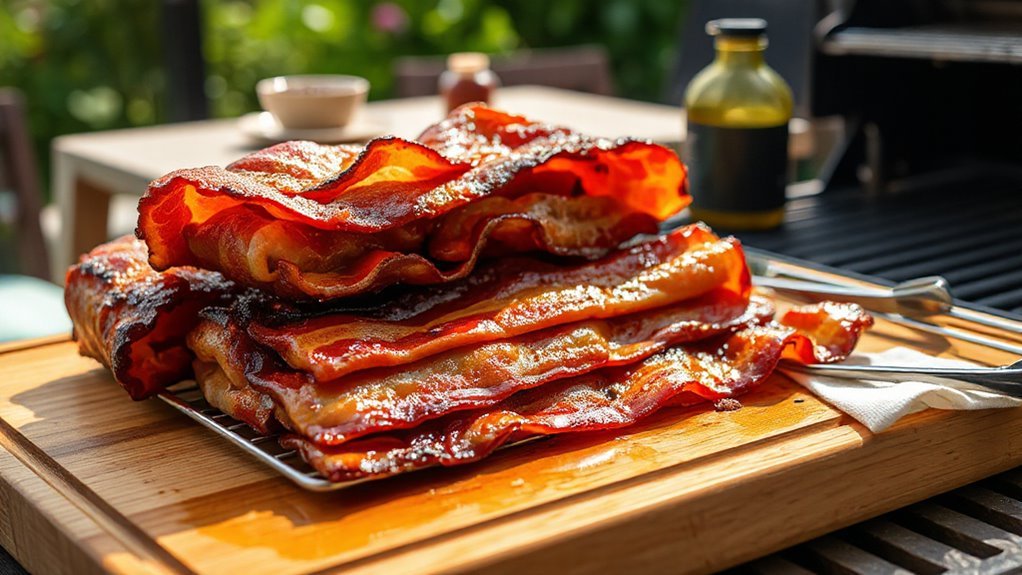
The wire‑rack trick shows how keeping bacon off the grates helps avoid soggy bottoms, but it also highlights a few hiccups we keep running into. We’ve learned that the most common bacon grilling mistakes stem from temperature swings, uneven spacing, and rushed flipping. To make sense of them, we break it down into two word discussion ideas and practical fixes.
- Temperature control – Keep the grill steady at 350 °F; a sudden flare‑up can scorch the edges while the middle stays limp.
- Spacing – Lay strips in a single layer without crowding; overlapping causes steam pockets and sogginess.
- Flipping timing – Flip halfway through, but don’t rush; a premature turn can tear the meat and waste fat.
We’ll experiment, note what works, and adjust as needed.
Frequently Asked Questions
Can I Grill Bacon on a Gas Grill Without a Lid?
Yes, we can grill bacon on a gas grill without a lid, but we’ll keep bacon grilling safety in mind, use indirect gas grill layers, monitor flare‑ups, and flip frequently for even crispness.
Will Using Maple‑Glazed Bacon Affect Flare‑Up Risk?
“Don’t bite the hand that feeds you.” Using maple‑glazed bacon does raise flare‑up risk because the sugary glaze caramelizes quickly, but we can still enjoy mouthwatering alternatives and rich smoke flavoring by managing heat and using indirect zones.
How Does Altitude Change Grill Temperature for Bacon?
We’ve found altitude effects lower grill temperature, so we set the heat a few degrees higher—about 10‑15 °F more than sea‑level settings—to keep bacon cooking evenly without under‑cooking.
Is It Safe to Reuse Bacon Grease for Future Grilling?
We say it’s generally safe to reuse bacon grease for future grilling, but we’ll watch altitude grilling challenges—thinner air can affect smoke point, so we filter, store cool, and test for off‑flavors before reusing.
Can I Add Herbs or Spices Directly to the Bacon While Grilling?
We say it’s like sprinkling fireworks on a summer night—yes, you can toss herb‑infused herbs and experiment with spice pairings directly onto the bacon while it grills, enhancing flavor beautifully.