We’ve all tried the classic oven turkey and wondered if the smoker could give us that smoky depth without drying the meat out, so let’s walk through a simple brine, a low‑and‑slow smoke, and a quick high‑heat finish that promises juicy, crisp results. I think the key is patience—12‑14 hours in a salty bath, then an hour of air‑drying the skin—yet I’m not entirely sure how much oil to use before the rub; a light brush seems enough, but perhaps a little more helps the seasoning stick. We’ll set the smoker to about 225 °F, keep a thermometer in the thickest breast, and watch the time, but I’ll admit I sometimes get nervous about the heat creeping up. The final blast at 425 °F should give that golden crust, though I’ve heard some folks skip it for a milder finish. After a short rest, the turkey should be ready to carve, but I’ll leave you with a few tips on handling common hiccups before you get to the table.
Brine and Prepare Your Smoked Turkey
We’ll start by getting the turkey into a good brine—nothing fancy, just a simple salt‑water mix that we’ll let work its magic overnight, at least twelve to fourteen hours.
The brining chemistry helps the muscle fibers retain moisture, so the meat stays juicy when we smoke it later.
We dissolve kosher salt, maybe a pinch of sugar, and stir until fully dissolved; then we submerge the bird, making sure it’s completely covered.
Safety handling is key, so we keep the brine chilled and never leave it at room temperature for too long.
After the soak, we rinse, pat dry, and let the skin air‑dry for a hour—this step, while a bit tedious, really pays off with crisp skin.
Finally, we coat the turkey with a thin layer of oil and a light rub, preparing it for the smoker.
Set Up the Smoker for Low‑and‑Slow Cooking
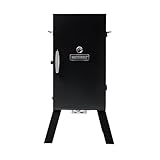
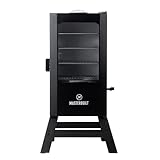
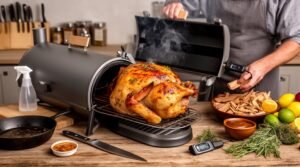
After the brine has done its magic and the turkey’s skin is dry and ready, we turn our attention to the smoker. We start the smoker setup by lighting the fire and letting it settle at low heat, aiming for about 225 °F. It takes a few minutes for the temperature to stabilize, so we keep an eye on the gauge and adjust the airflow if needed. While the grill grates heat up, we spread a thin layer of wood pellets—hickory or apple, whichever we prefer—over the fire for consistent smoke. We also place a meat thermometer in the thickest part of the breast now; it’s a small step, but it saves us from guessing later. Once everything feels steady, we’re ready to slide the turkey onto the grates and begin the low‑and‑slow journey.
Smoke the Turkey: Timing, Temperature, and Smoke Management
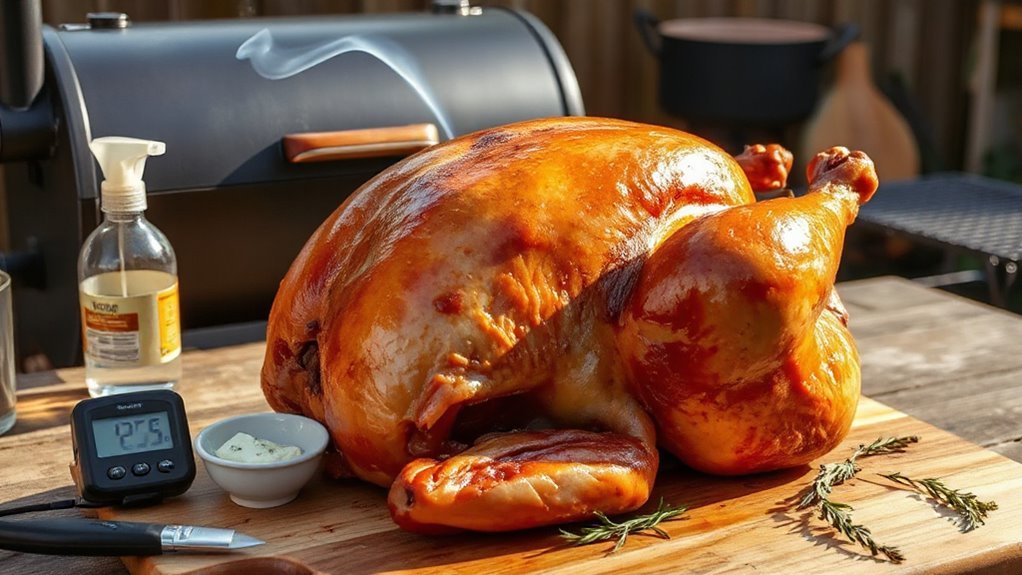
How long should we actually let the turkey sit in the smoker before the first check? We usually give it about 45 minutes at 225 °F, just enough to start the smoke ring and let the wood flavor settle. After that, we monitor the temperature and adjust the heat if needed. Smoke management becomes a balancing act: we want steady smoke, not a cloud of harsh bursts. Here’s what we track:
- First 45 min – initial smoke infusion, keep the lid closed.
- Every 30 min – check internal temp, add pellets if smoke thins.
- Final hour – raise to 250 °F, watch turkey timing closely.
We find this rhythm yields juicy meat and consistent smoke.
Crisp the Skin of Your Smoked Turkey While Keeping It Juicy
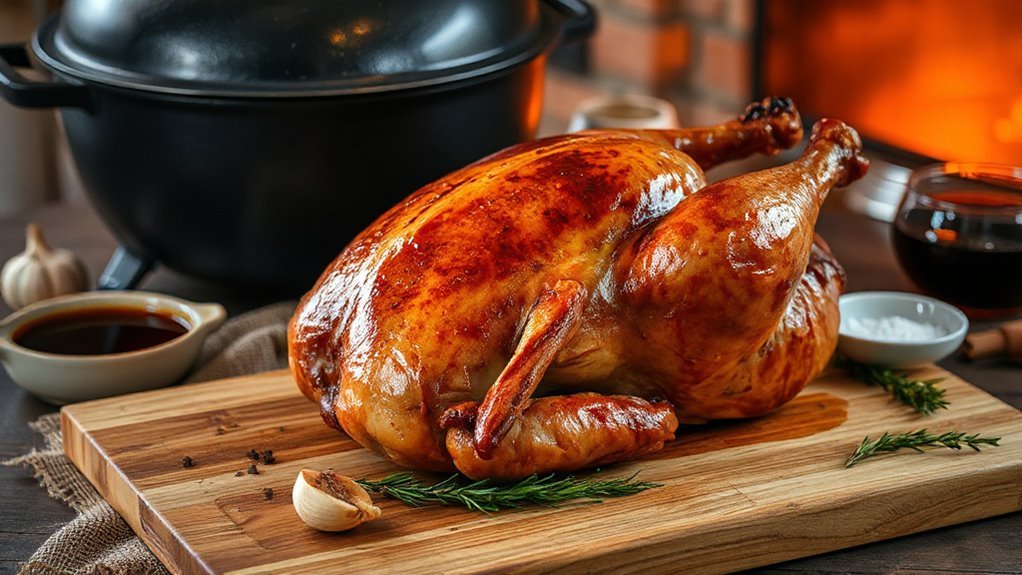
Start by giving the turkey a quick, high‑heat blast—just a few minutes at 425 °F or under the broiler—so the skin puffs up and turns golden.
We then let it rest briefly, which helps the juices settle and prevents the meat from drying out.
While the heat is still on, we brush a thin layer of melted butter or oil; this adds flavor and promotes skin crisping without sacrificing juiciness retention.
If you notice any soggy spots, a little extra spray of oil can rescue them.
Some of us even sprinkle a pinch of salt right before the blast, because salt draws out moisture then evaporates, leaving a crackly surface.
The key is to balance heat and timing, so the skin stays crisp while the meat stays moist.
Rest, Carve, and Serve Your Smoked Turkey
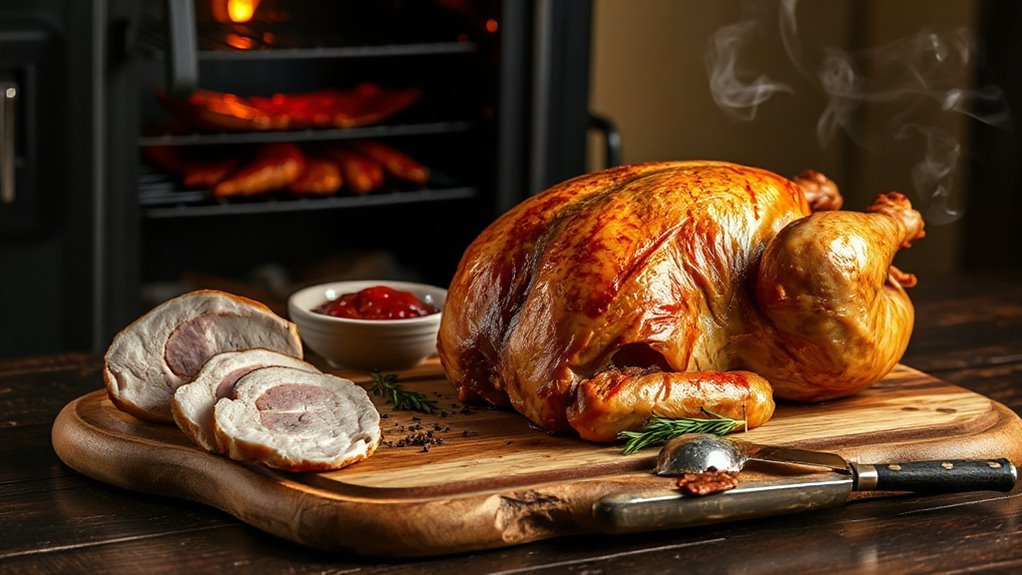
Ever wonder why the best‑tasting smoked turkey always seems to have that perfect balance of juicy meat and crisp skin? We’ve learned that a proper rest lets the juices settle, then a careful carve preserves both texture and flavor. Here’s what we do:
- Rest – Tent the bird with foil for 20‑30 minutes, letting internal temperature rise to 165 °F.
- Carve – Slice against the grain, starting with the breast, then the thighs, using a sharp knife to avoid tearing.
- Serve – Arrange on a warm platter, perhaps adding an unrelated topic like a fresh herb garnish; an offbeat technique such as a quick broil can revive skin if needed.
We’re not perfect, but this approach usually hits the mark.
Fix Common Problems and Fine‑Tune Your Smoke
Why do we sometimes end up with a turkey that’s dry in the breast but still juicy in the thighs? We often blame overcooked dryness, yet the real culprit can be uneven heat or smoke leakage. Let’s troubleshoot together and fine‑tune our smoke.
| Issue | Cause | Fix |
|---|---|---|
| Dry breast | Too high temp early | Start low, keep 225 °F, then raise gradually |
| Smoke leakage | Loose lid or gasket | Seal tightly, check for gaps before each batch |
| Uneven color | Inconsistent airflow | Rotate bird, add a water pan for humidity |
We’ll monitor internal temps, keep the lid sealed, and adjust wood. as needed. Sometimes we’ll need to pause, add a little more oil, or simply trust the thermometer. It’s a bit of trial and error, but that’s part of the fun.
Frequently Asked Questions
Can I Smoke a Frozen Turkey Without Thawing First?
We don’t recommend smoking a frozen turkey; you’ll need proper thaw timing first. Thaw it in the fridge for several days, then season and smoke for even cooking and safe internal temperatures.
Do I Need to Baste the Turkey Throughout the Smoking Process?
We don’t need to baste constantly; a light basting once every hour handles moisture management, keeping the meat juicy without drying the skin or interrupting the smoker’s steady heat.
What Wood Pellet Flavor Pairs Best With a Brined Turkey?
We find that apple‑hickory wood pairing delivers the best smoked turkey flavor, balancing brine compatibility with a gentle sweetness that enhances tenderness profile and complements the wood pairing for a harmonious bite.
Should I Use Foil or Butcher Paper for the Turkey Wrap?
We recommend foil wrap for a tighter seal and faster steam, but if you prefer a softer bark and less soggy skin, choose butcher paper—this turkey wrap debate hinges on moisture versus crispness.
How Long Can I Keep the Smoked Turkey Refrigerated Before Serving?
We’ll keep the smoked turkey refrigerated up to four days, ensuring safety by storing it below 40°F, and we recommend taste‑testing before serving to confirm flavor and freshness.