We all know a pellet grill can turn a simple dinner into a smoky masterpiece, but the mess it leaves behind quickly becomes a headache. After each cook we usually brush the hot grates and empty the fire pot, yet I’m still tempted to skip the quick vacuum of loose ash—maybe because it looks harmless at first. The real trick, I think, is getting into the vents and drip tray before grease builds up; a non‑abrasive degreaser does the job, though I sometimes wonder if a little vinegar could handle the odor too. We’ll walk through the light‑clean routine, then the deeper monthly steps, and finally the annual teardown that actually restores performance, so you’ll see why each stage matters.
Light‑Clean Your Pellet Grill After Every Cook
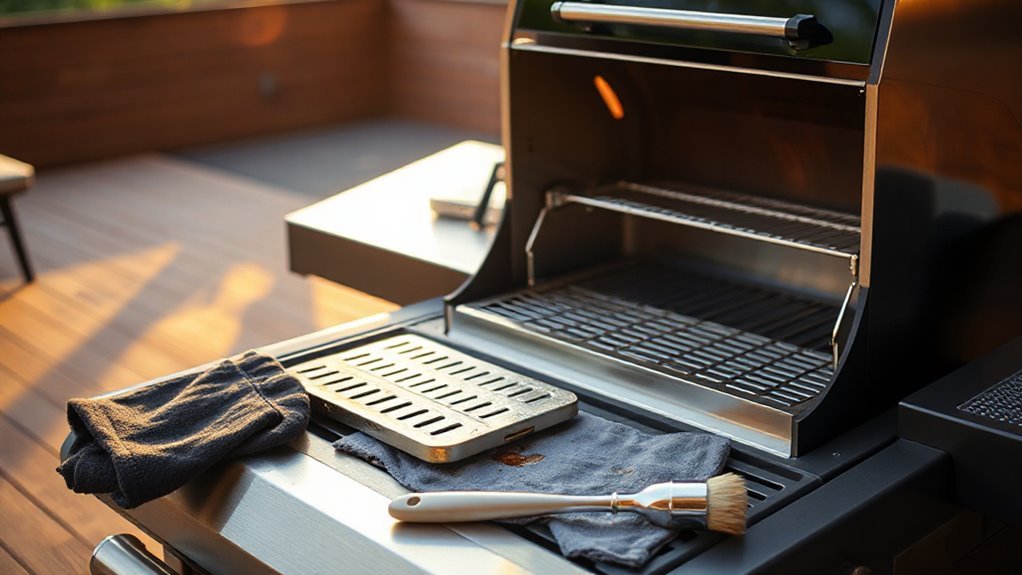
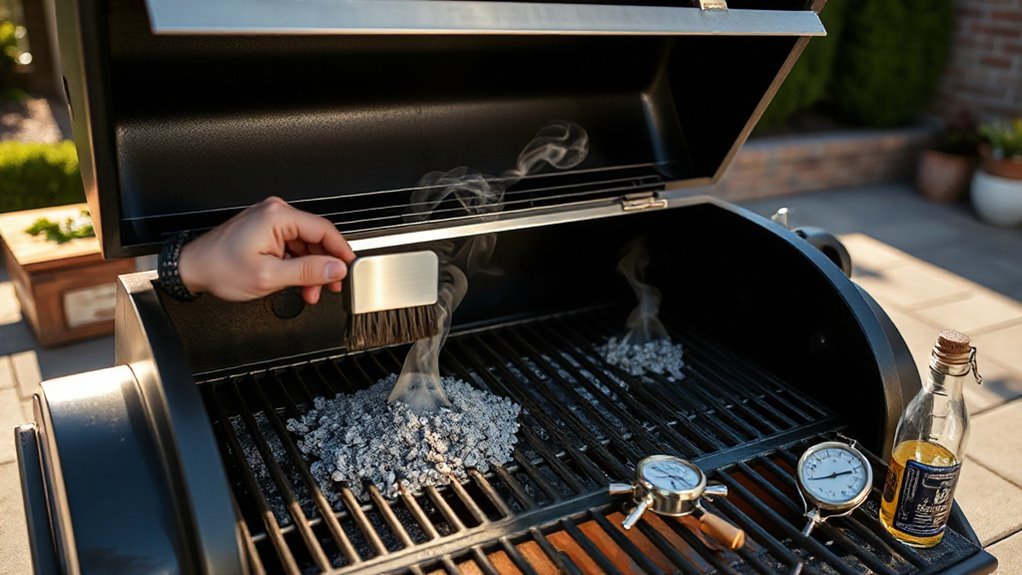
Ever wondered how quickly a pellet grill can get messy after just one cook? We’ve all seen the ash and grease build‑up, and we know that a light‑clean after each session saves a lot of hassle later. First, we scrape the hot grates with a brush—quick, easy, and it removes the stuck bits before they harden. Then we empty the fire pot and grease tray, wiping any spills with a damp cloth. Timing delays matter; waiting too long lets residue bake on, turning a simple scrape into a stubborn job. A quick shop‑vac of loose ash keeps the chamber clear, and we check vent holes for blockages. These two word discussion ideas—scrape and wipe—keep the grill ready for the next cook without major effort.
Deep‑Clean Your Pellet Grill for Monthly Maintenance
We usually set aside a dedicated hour once a month to give our pellet grill a proper deep‑clean, because the quick scrapes after each cook just aren’t enough to keep the ash and grease from building up. During this monthly maintenance we follow a clear deep cleaning cadence that feels almost ritualistic, yet we still improvise a bit when the ash is stubborn.
- Vacuum the fire pot, hopper, and chamber, then wipe the drip tray and heat baffle with a degreaser.
- Soak grates in hot, soapy water, scrub with a wire brush, and rinse thoroughly.
- Inspect vents and the chimney, scrubbing any residue with a foil ball.
We find this routine keeps flavors pure and prevents flare‑ups, even if we sometimes skip a step when we’re in a hurry.
How to Tear Down and Re‑Season Your Pellet Grill Yearly
Do you ever wonder why a grill that’s been running all year can start tasting like old smoke? We’ve been there, and the answer usually lies in a neglected teardown. First, we unplug the unit and let it cool completely—no shortcuts. Removing the fire pot, hopper, and auger can feel like a puzzle, especially when those teardown challenges surface: stubborn bolts, warped brackets, and ash‑caked vents. We soak every removable part in warm soapy water, then scrub with a brush, being careful not to strip the protective coating. After everything dries, we re‑season by running a light pellet burn for 30 minutes, which creates a fresh, non‑stick layer. Beware of seasoning pitfalls like over‑oiling; a thin coat is enough. Finally, we reassemble, double‑check connections, and fire up, hoping the new smoke flavor shines through.
Gather Essential Tools and Safe Cleaning Products for Pellet Grills
When you’re getting ready to clean your pellet grill, the first thing you’ll notice is that the right tools make the whole process feel less like a chore and more like a quick routine. We usually start by gathering a sturdy grill brush, a shop‑vac for ash, and a non‑abrasive degreaser—these keep the metal surfaces spotless without scratching. It’s also smart to have a set of heat‑resistant gloves and a small screwdriver for gasket replacement, because a loose seal can ruin temperature control. Finally, we keep a calibration guide handy for pellet hopper calibration, ensuring the feed rate stays accurate after cleaning.
- Grill brush or scraper
- Shop‑vac or ash vacuum
- Food‑safe degreaser and calibration guide
Quick Fixes for Ash, Vents, and Odors on Pellet Grills
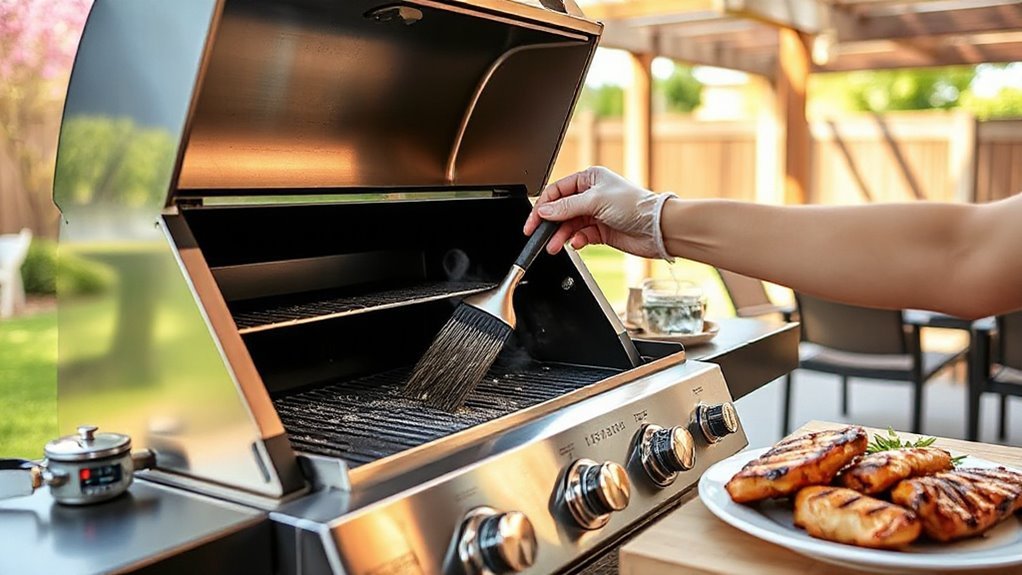
Ever notice how a thin layer of ash can turn a smooth vent into a stubborn blockage, and suddenly the grill’s airflow feels off? We’ve all been there—ash buildup gathering in the fire pot, then creeping into the vent channels, causing vent clogging that makes the temperature wobble. A quick fix is to grab a damp cloth and a small brush, then gently sweep the ash out before it hardens. If the vent still feels restricted, we toss a crumpled aluminum foil ball into the opening and shake it; the foil scrapes away the stubborn residue. For lingering odors, we place a bowl of white vinegar inside while the grill cools, letting it absorb the smell. Sometimes a quick vent of the hopper helps, too. These simple steps keep the grill humming without a full deep clean.
Simple Checks to Stop Grease Fires & Damage on Pellet Grills
If you’ve ever watched a flare‑up turn a quiet evening into a mini‑fireworks show, you’ll know that a simple check can make all the difference. We’ve learned that a few common sense steps keep the grill safe and the food tasty, so we’ll walk you through them. First, always empty the fire pot and grease tray after each cook; lingering grease is a fire starter. Second, inspect vent holes and the smoke stack for blockages—nothing should restrict airflow. Third, give the hopper a quick shake to prevent pellet clogs that can overheat the system.
- Check fire pot – scrape and wipe it clean.
- Clear vents – remove ash or grease buildup.
- Inspect grill surface – ensure a clean grill before lighting.
These safety reminders and maintenance tips feel minor, yet they prevent costly damage.
Frequently Asked Questions
Can I Use a Pressure Washer on the Grill’s Exterior?
We don’t recommend pressure washing the exterior; it can force water into seams and electronics. Instead, use a damp cloth and mild grill‑safe cleaner for exterior cleaning, keeping moisture away from internal components.
Will a Stainless‑Steel Grill Rust if I Don’T Dry It After Cleaning?
We promise it won’t rust if you dry it promptly—stainless‑steel corrosion loves moisture, so after cleaning, wipe it down and let it air‑dry, and your grill stays shine‑ready.
How Often Should I Replace the Pellet Hopper’s Rubber Seal?
We recommend checking the hopper’s rubber seal every few months and replacing it whenever it shows cracks, wear, or loss of exterior pressure, because a compromised seal can cause pellet leakage and uneven cooking.
Is It Safe to Clean the Grill With a Steam Cleaner?
We don’t recommend steam cleaning; while it sounds tempting, cleaning safety concerns arise—steam can seep into electronics and cause rust. Stick to the recommended brushes, vacuums, and degreasers for reliable results.
Can I Store the Grill Outdoors During Winter Without a Cover?
We’d say no—outdoor storage in winter weather protection requires a cover. Without one, snow, ice, and moisture can rust metal, warp seals, and damage electronics, shortening your grill’s lifespan.