We’ve all stared at a grill that’s turned a little brownish and wondered if it’s still okay to fire up. A thin layer of surface rust might just be a cosmetic nuisance, yet it can flake off and end up on the food, which isn’t exactly appetizing. If the rust is patchy and you can scrub it away, a quick clean and a fresh coat of oil could bring it back to life, but once it’s spreading or the metal feels weak, replacing the grate feels safer. I’m not entirely sure where the line is, but it seems worth testing a small spot before committing to a whole meal. Let’s explore what really happens when we cook on rust and how to decide if a grill is still usable.
Is a Rusty Grill Safe to Cook On?
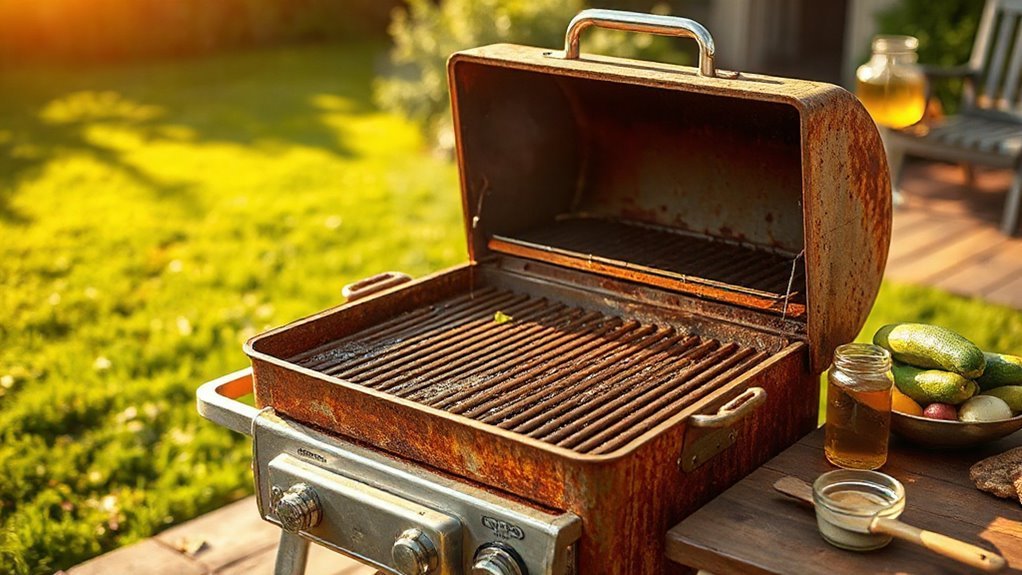
Is a rusty grill actually safe to cook on? We’ve all wondered that while prepping a weekend BBQ, especially when we spot orange specks on the grate.
In our experience, a thin layer of rust doesn’t instantly poison the food—rust health concerns are generally low for occasional exposure. However, grilling safety guidelines, like those from USDA, advise against regular use of rusted surfaces because particles can transfer to meals.
If the rust is light, a quick scrub and a fresh seasoning coat might suffice, but heavy buildup is a different story; it can chip off, and repeated ingestion could raise health issues.
We tend to err on the side of caution, replacing heavily rusted grates to keep our grilling sessions both tasty and safe.
How Does Rust on a Grill Affect Flavor and Food Quality?
What really happens to the taste of our food when the grill’s grate is speckled with rust? We notice a subtle metallic tang that can dominate the natural flavors we love. The rust particles, though not highly toxic, raise rust health concerns if they accumulate, and they definitely compromise flavor safety. In our experience, even light rust makes food stick more and creates uneven sears, which hurts overall quality. We’ve found it helpful to keep an eye on these signs:
- Slight orange specks give a faint iron taste.
- Heavier rust leads to noticeable bitterness.
- Sticking increases, ruining texture.
- Persistent rust signals deeper grill degradation.
When Does Rust on a Grill Require a New Grate?
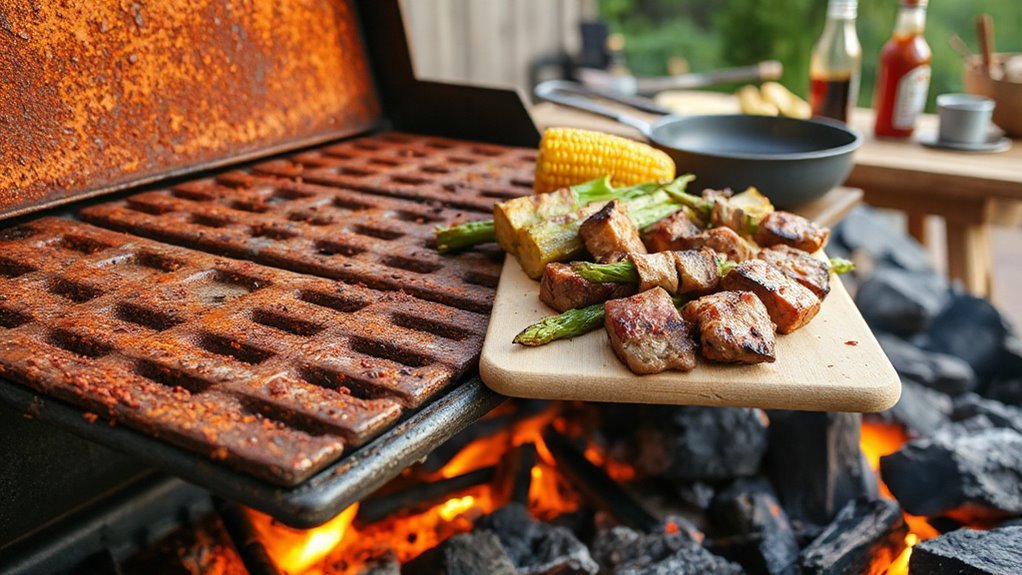
We’ve already seen how even a light dusting of rust can tinge the taste and make things stick, but the bigger question is when that orange speckle turns into a problem that calls for a brand‑new grate.
We usually start by checking how much of the surface is covered. A few specks? Probably fine after a quick scrub, but once rust spreads across more than a quarter of the grate, the metal’s integrity starts to falter.
Heavy, flaky rust can break off, contaminating food and compromising rust safety, so we recommend replacement at that point. Also, if you notice the grill’s seasoning can’t hold or the metal feels porous, it’s a sign that rust prevention has failed. In those cases, a new grate isn’t just convenient—it’s necessary for health and flavor.
What Are the Quickest Steps to Clean Light Rust From a Grill?
Ever wonder how quickly you can banish those tiny orange specks before they turn into a full‑blown grill disaster? We’ve all stared at a speck and thought, “maybe it’s okay,” but a quick clean saves flavor and safety. Here’s a straightforward routine we follow, using two word ideas like “light rust” and “quick steps” to keep it simple.
- Grab a brass or stainless steel brush and scrub the affected area gently; the bristles lift rust without gouging.
- Spray a mixture of vinegar and water, let it sit a minute, then wipe with a damp cloth to dissolve residual particles.
- Pat the grill dry with a clean towel; moisture is the enemy, so we’re thorough.
- Finish with a thin coat of oil, spreading it with a paper towel for protection.
These quick steps keep the grill ready for the next barbecue.
How Do I Reseason a Rusty Cast‑Iron Grill After Rust Removal?
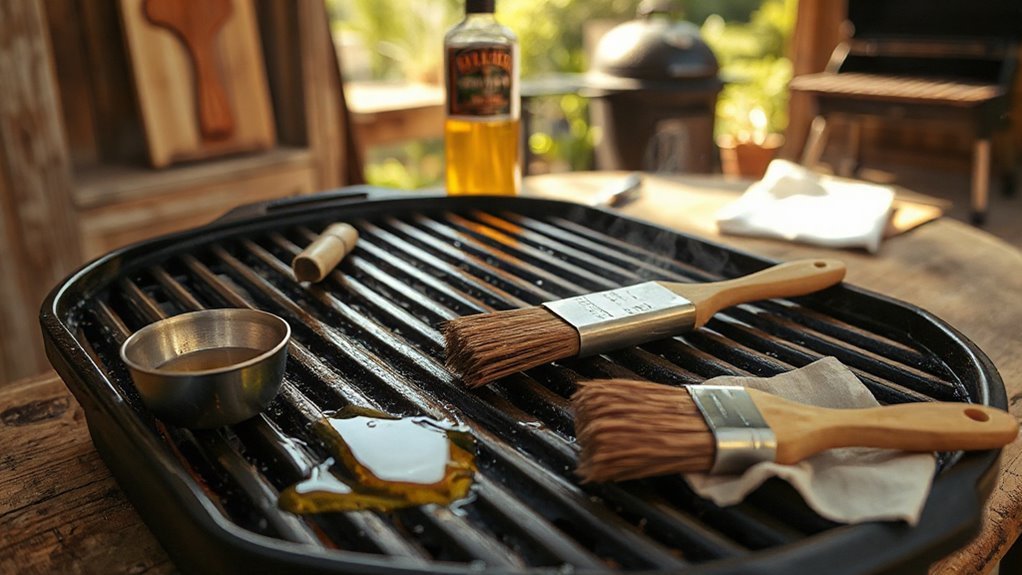
Ever wondered if a freshly scrubbed, rust‑free cast‑iron grill can truly bounce back with a solid seasoning layer? We’ve been there, staring at the clean grate and thinking, “How to reseason without losing the hard‑won rust prevention we just earned?”
First, we heat the grill to a medium temperature, then we wipe it down with a thin coat of high‑smoke‑point oil—flaxseed or grapeseed works. Let it sit, then bake for an hour, turning it halfway; the oil polymerizes, forming that protective, non‑stick skin. We repeat the coating twice if the surface still feels a little dry. After cooling, we store the grill in a dry spot, because any moisture will undo our work. It’s a simple ritual, yet it feels like a small victory against future rust.
What Daily Habits Keep a Grill Rust‑Free?
Do you ever wonder why some grills stay pristine while others turn into rust‑covered relics? We’ve learned that rust prevention hinges on tiny, consistent actions. Even if we’re busy, a few daily habits make a huge difference, and we’ll share what works for us.
- Wipe the grates dry right after cooking, never let water sit.
- Lightly oil the surface with a paper towel to keep a protective film.
- Store the grill in a covered, dry spot, avoiding humidity.
- Inspect for specks each night and brush off any stray particles.
We try to remember these steps, though sometimes we forget and have to redo a quick clean. Still, the habit of a quick wipe and a dash of oil feels almost automatic now, and it really cuts down on rust buildup.
How to Know When a Grill Grate Is Beyond Repair?
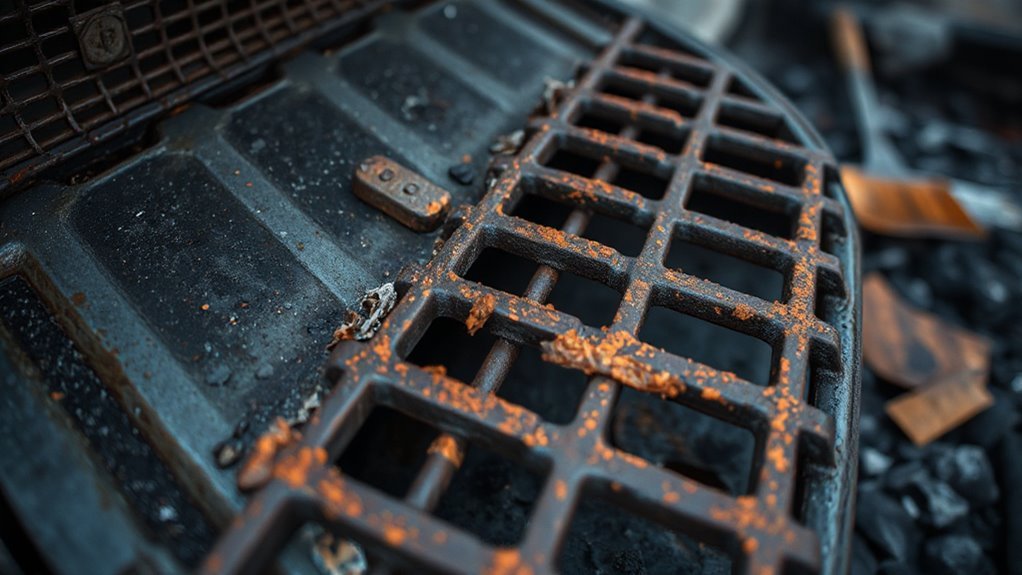
We’ve gotten pretty good at wiping down the grates after each cook‑out, but there comes a point when even the most diligent routine can’t rescue a severely corroded surface.
We start by checking for orange specks that spread across the metal; if they’re just a few, we can scrub and reseason, but when the rust forms a patchy, flaky layer, it’s a sign the protective seasoning is gone.
We notice the texture changing—rough, pitted spots that make food stick and taste metallic.
At that stage, grill maintenance turns from cleaning to replacement.
Heavy rust, especially on cast‑iron, compromises structural integrity, so we usually err on the side of safety.
In short, when rust prevention no longer works and the grate feels weak, it’s beyond repair.
Frequently Asked Questions
Can Rust Cause Allergic Reactions When Inhaled?
We’ve found that rust allergy through inhalation risk is rare, but fine iron‑oxide particles can irritate sensitive airways. If you notice wheezing or itching after exposure, avoid breathing in rust dust and keep grills well‑ventilated.
Is It Safe to Use a Rusty Grill for Outdoor Camping?
We’d say it’s unsafe for camping; a rusty grill brings rust risks and demands thorough cleaning. Even light orange spots can leach metal, spoil flavor, and compromise health, so replace or season first.
Do Different Grill Materials Rust at Different Rates?
We’ve found that different metals rust at different rates, so stainless steel resists rust far longer than cast iron or carbon steel, which corrode quickly if not seasoned and kept dry.
Will Rust Affect the Grill’s Heat Distribution?
We’ll tell you: rust can disrupt heat distribution, causing uneven cooking, and corrosion raises safety concerns. By cleaning or replacing corroded spots, we preserve even heat and protect cooking safety.
Can a Rust‑Proof Coating Replace Regular Seasoning?
We think a rust‑proof coating can replace regular seasoning, but sealing versus seasoning matters: coating longevity often exceeds seasoning, yet you still need proper prep and occasional re‑coating for optimal protection.