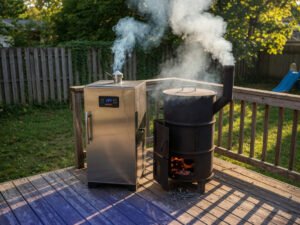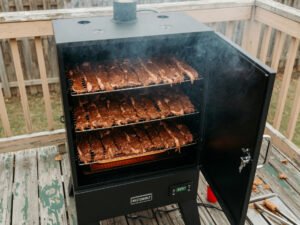
We’ll admit, mastering a charcoal‑grilled brisket feels a bit like taming a wild beast, but the payoff is worth the patience. We start with a well‑trimmed full‑packer, coat it in a coffee‑pepper rub, and set up a three‑zone fire that lets us smoke low and slow at 225 °F. When the meat hits the stall around 165 °F we wrap it, let it finish to fork‑tender, then rest before slicing against the grain. The process isn’t flawless—sometimes the temperature drifts, the rub clumps, or we wonder if the water pan is truly necessary—but those quirks keep it interesting and make the final bite all the more satisfying.
Choose Your Perfect Charcoal‑Grilled Brisket Cut and Trim
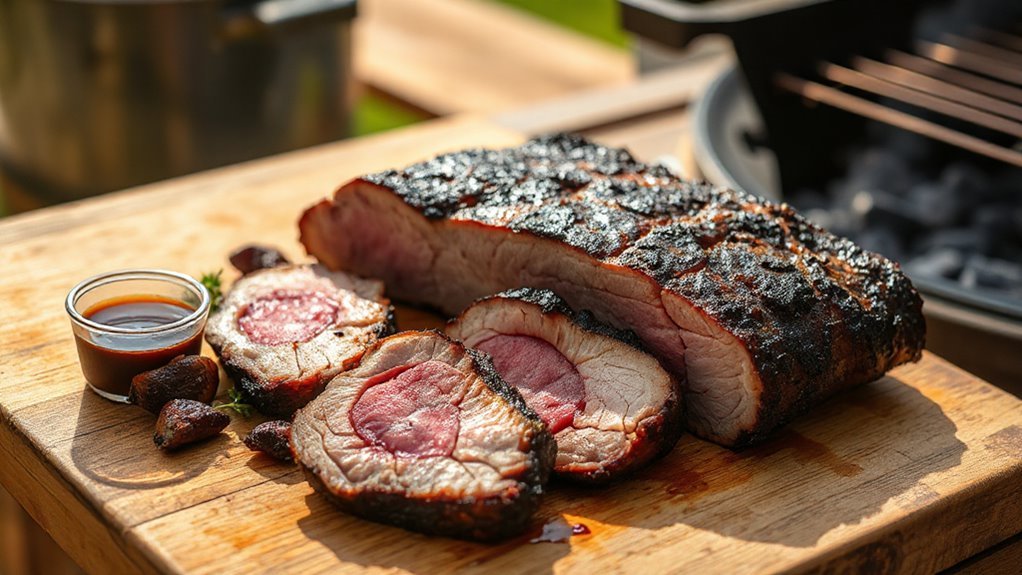
When we first start hunting for the right brisket, we usually lean toward a full‑packer cut that’s about 4 to 15 pounds—big enough to feed a crowd but still manageable on a modest grill.
We like the balance of flat and point because it gives us both tender slices and that juicy, marbled bite.
After we bring the meat home, brisket trimming becomes a little ritual; we trim the fat cap down to roughly a quarter‑inch, not too thin, not too thick, hoping it’ll render nicely and still protect the meat.
Some of us even keep a few strips for extra charcoal smoke flavor later.
It’s not an exact science, but the result feels richer, and the grill’s heat seems to work better with that modest fat layer.
Mix a Flavor‑Packed Rub for Charcoal‑Grilled Brisket
After we’ve trimmed the fat cap to that sweet quarter‑inch, we’re ready to give the meat its flavor backbone. We start by measuring out a rub blend that balances salty, sweet, and smoky notes—about a quarter‑cup kosher salt, two tablespoons each of ground coffee and cracked black pepper, then a generous spoonful of smoked paprika, garlic powder, and onion powder. A pinch of dried parsley adds a subtle herb finish. We whisk everything together until it’s evenly speckled, then pat the mixture onto the brisket, making sure each crevice gets coverage. This coating will influence smoke timing, forming a crust that locks in juices while the wood smoke does its work. It’s not exact science, but we trust the balance we’ve honed.
Set Up a Three‑Zone Charcoal Grill for Low‑and‑Slow Smoking
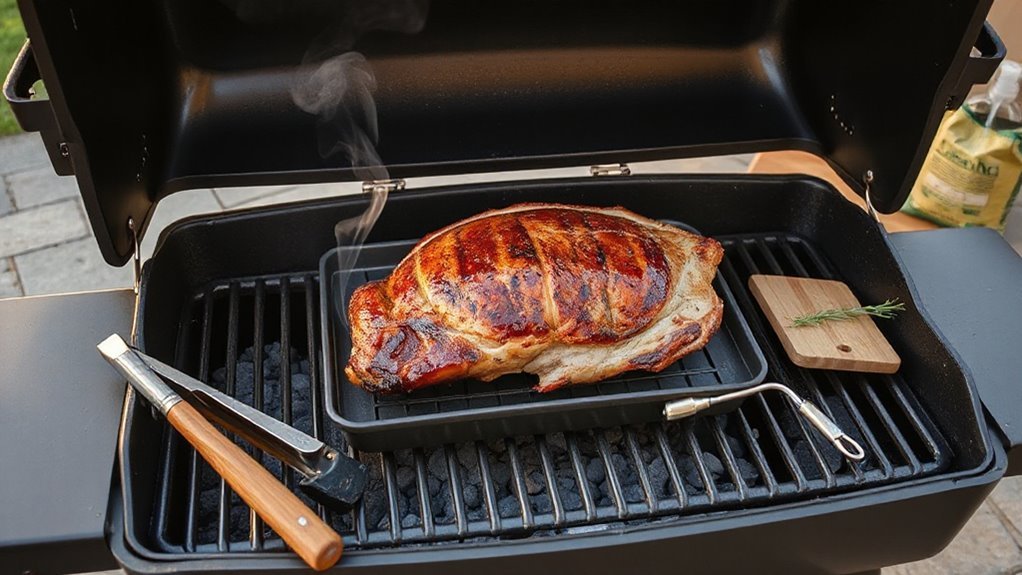
Ever wondered why a three‑zone setup feels like the secret handshake of low‑and‑slow grilling? We start by lighting charcoal in a safe, controlled way—use a chimney starter, keep it away from flammable surfaces, and let the coals ash over before spreading them.
Then we pile the hot coals on one side of the grill, creating a direct‑heat zone for searing, and leave the opposite side empty for indirect cooking. A water pan or foil tray sits between the zones, adding moisture and stabilizing temperature.
We adjust the bottom vents to keep the grill around 225 °F, and we open the lid vents opposite the coals for proper airflow. Remember grill safety: never leave the fire unattended, and keep a fire extinguisher nearby.
This layout lets the brisket sit in the cool zone while the heat circulates, achieving that gentle, steady smoke we need.
Smoke the Charcoal‑Grilled Brisket to the Stall and Wrap It Right
Curious how the stall feels on a charcoal grill? We watch the internal temperature creep toward 165 °F, feeling that stubborn plateau. When the meat finally pushes through, we know it’s time for foil wrapping, but we still keep an eye on smoke timing to preserve that bark.
- Smoke timing – we add fresh coals and wood chips every hour for the first three hours, then pause to let the heat settle.
- Stall observation – the thermometer flatlines; we resist opening the lid, trusting the moisture in the pan.
- Foil wrapping – at 165 °F we lay a double‑layer of foil, pour in a splash of broth, and seal tightly.
We sometimes wonder if a longer stall would improve flavor, yet we’re eager to finish, so we wrap and continue cooking.
Wrap, Cook to Fork‑Tender, and Rest the Charcoal‑Grilled Brisket
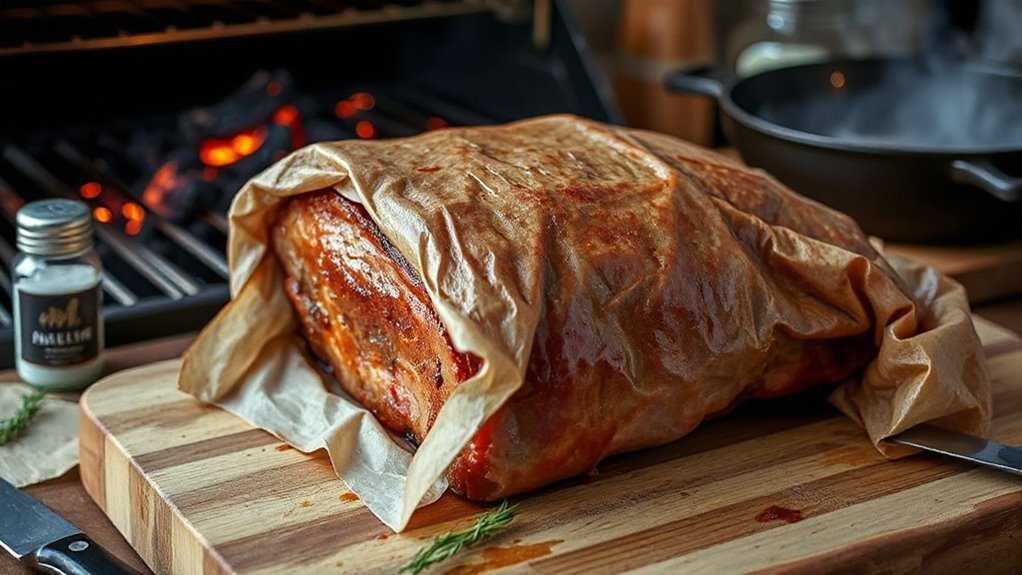
So, once the brisket hits that stubborn 165 °F plateau and we’ve sealed it in a snug double‑foil wrap with a splash of broth, the real patience game begins. We keep the wrap timing tight—no more than a few minutes to seal, then back onto the grill.
The heat nudges the meat toward 190 °F, and we check for fork‑tenderness by probing the thickest part; if the fork slides in with a slight give, we’re good. After that, we let the brisket sit, still wrapped, using a resting method that lets carry‑over heat finish the job. A 20‑minute rest feels right, though sometimes we let it linger a bit longer for extra juiciness.
This pause lets the juices redistribute, making the final slice wonderfully moist.
Slice, Serve, and Store Your Charcoal‑Grilled Brisket
After the brisket has rested, we finally get to the part we’ve all been waiting for—slicing it. We let the knife glide against the grain, aiming for a quarter‑inch thickness, then we pause, taste a piece, and check the serving temperature; it should be around 140‑150°F, warm enough to melt the fat but not scalding.
- Slice the flat first, keeping the pieces uniform for easy plating.
- Separate the point, rotate the meat, and slice it the same way, letting the richer texture shine.
- Arrange the slices on a board, drizzle a little jus, and cover loosely for brisket storage.
We’ll keep leftovers in the fridge, wrapped tightly, and reheat gently to preserve juiciness.
Frequently Asked Questions
Can I Use a Gas Grill Instead of Charcoal for This Method?
We can swap charcoal for a gas grill, but beware topic drift—don’t let unrelated debate over fuel distract you. Keep low heat, indirect zones, and wood smoke to preserve flavor.
How Do I Prevent the Brisket From Drying Out During the Stall?
We prevent moisture loss during the stall by wrapping the brisket in foil or butcher paper around 165°F, adding a splash of broth, and keeping the grill steady so bark development still forms without drying out.
Is It Necessary to Soak Wood Chips Before Adding Them to the Grill?
We say the chips soak like sunrise soaking into the sky—yes, soaking them fuels a richer smoker setup and deeper flavor infusion, letting the wood release steady smoke without burning too quickly.
What Temperature Should I Set the Grill for the Final Rest Period?
We set the grill to about 170‑180 °F for the final rest, letting the brisket sit until it reaches roughly 195‑200 °F. This tender, timing balance ensures perfect rest temperature and juicy texture.
Can I Refrigerate the Wrapped Brisket Before Slicing and Serving?
We can refrigerate the wrapped brisket, then slice it later, letting the cool‑down deepen flavor; just remember cook time options shift, so adjust carving techniques accordingly for ideal tenderness.