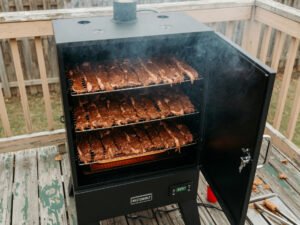
We all know a smoker can turn into a greasy mess after a weekend of ribs, and the first step is to make sure it’s completely cool and unplugged—otherwise we’re risking a shock or a fire. I usually start by pulling out the racks, drip tray, and water pan, giving them a hot, soapy soak while I wipe the interior with a vinegar‑water mix; it’s a bit messy, but the smell actually reminds me of the smoky flavor we love. Sometimes I wonder if a quick steam‑rinse is enough, or if we should go the extra mile with a deeper scrub, and that hesitation is why we’ll explore a few easy tricks next.
How to Prepare Your Electric Smoker for a Safe Clean‑Up
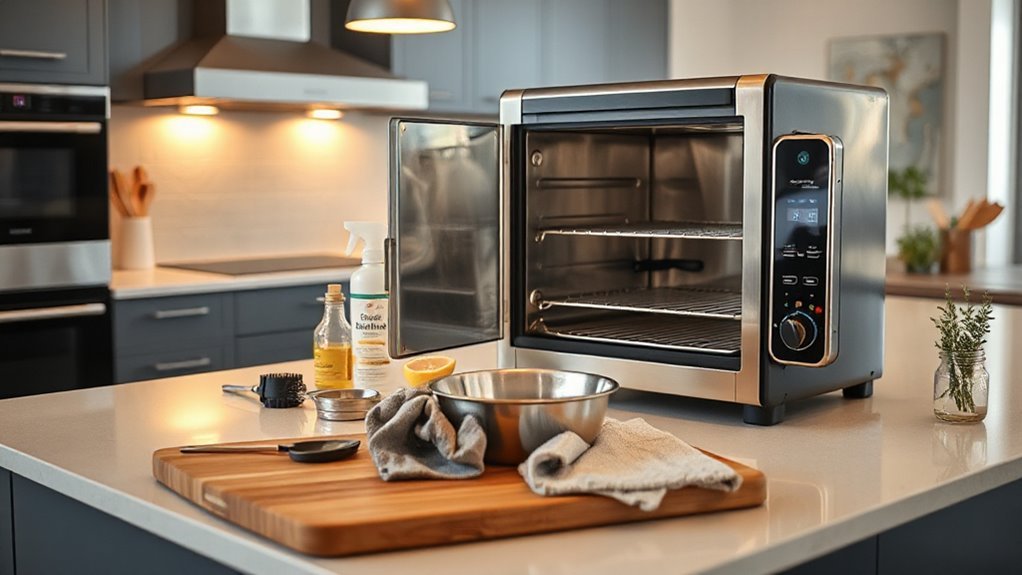
Before we even think about scrubbing away the grease, we’ve got to make sure the smoker’s completely cool and unplugged—otherwise we’re just asking for a shock, right?
We usually double‑check the cord, then give the unit a minute to settle.
If the battery is empty, we’ll plug it in just to confirm there’s no lingering charge that could surprise us later.
Next, we pull out the racks, the drip tray, and any water pan, keeping an eye out for misplaced parts that might’ve slipped behind the heater.
It helps to lay everything on a clean towel so nothing gets lost.
A quick visual scan for loose screws or broken hinges saves us a headache during the actual wash.
Once everything’s accounted for, we can move on to the deeper cleaning steps.
Clean Removable Parts of Your Electric Smoker
Now that everything’s unplugged and cool, we can finally get our hands on the racks, supports, water pan and drip tray. We soak them in hot, soapy water for about fifteen minutes—just enough for grease removal to loosen. While they sit, we might glance at the grill scraper, wondering if the steel wool will be too harsh; usually it’s fine for stubborn spots. After soaking, we scrub each rack, using a Scotch‑brite pad for those creosote patches, then rinse thoroughly. The water pan and drip tray get the same treatment, and we dry everything completely to avoid rust. Once everything’s clean, we reassemble, feeling a bit satisfied that the smoker’s interior will stay fresh for the next round.
Deep Clean the Interior of Your Electric Smoker (Three Easy, Non‑Chemical Tricks)
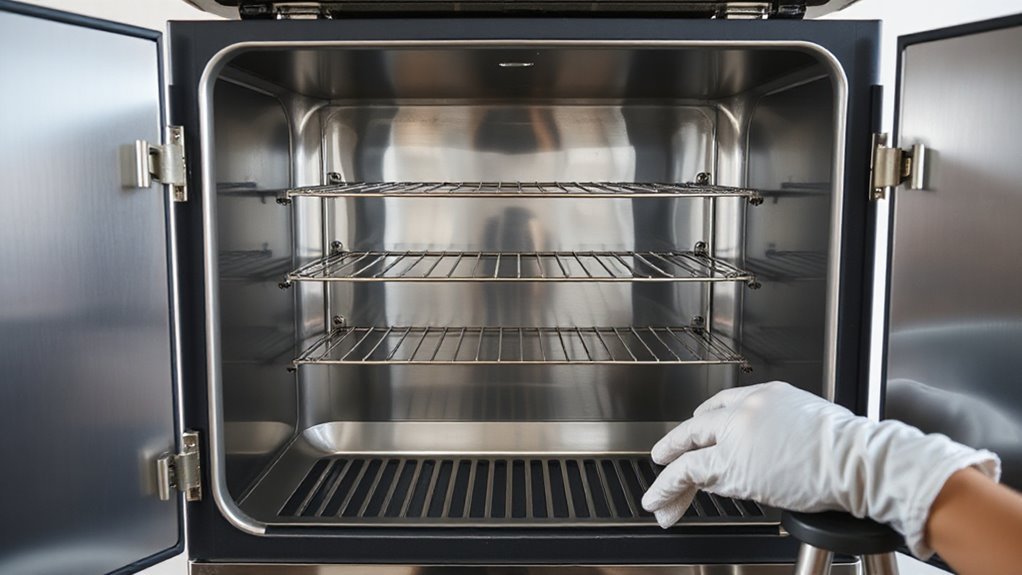
Ever wondered how to get that stubborn, baked‑on grime out of your smoker’s interior without reaching for harsh chemicals? We’ve tried a few tricks, and the first is a simple 50/50 spray of hot water and apple cider vinegar. Let it sit half an hour, then wipe with a soft sponge—this loosens grease and creosote.
Next, we use a wooden grill scraper for tougher spots, being careful not to scratch the metal.
Finally, a light steam rinse (just a pot of boiling water) helps flush out any lingering residue, completing interior sanitation. These two word ideas—vinegar spray and steam rinse—are easy, non‑chemical, and keep the smoker clean without the hassle of harsh cleaners.
How to Re‑Season Your Electric Smoker After Cleaning
After we’ve gotten the interior sparkling with the vinegar‑steam routine, the next step is to bring the smoker back to life by re‑seasoning it. We’ll reassemble the racks, then fire the unit at its highest setting for an hour or two with a handful of wood chips. The fresh smoke creates a protective layer, which is essential for good seasoning after clean and for future flavor consistency.
| Step | Why it matters |
|---|---|
| Pre‑heat to max | Drives off residual moisture |
| Add wood chips | Generates new smoke coating |
| Run 1‑2 hrs | Builds a stable seasoning film |
| Cool, then wipe | Locks in flavor and prevents rust |
These maintenance tips keep the smoker ready for the next round, and we’ll notice the difference in taste almost immediately.
Prevent Mold & Keep Your Electric Smoker in Top Shape
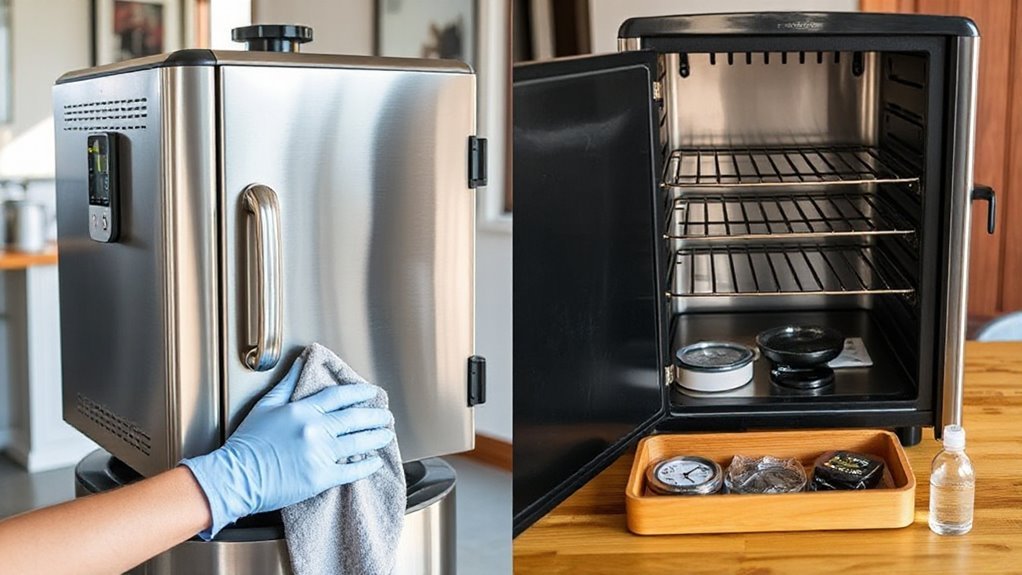
Do you ever wonder why a little mildew can ruin an otherwise perfect smoke? We’ve learned that mold thrives in damp corners, so we keep the interior dry by wiping down after each use and letting the door stay ajar for a bit.
When we notice a musty smell, we heat the smoker to 275 °F for about forty minutes, then wipe the walls with warm water—simple mold prevention that works.
We also follow seasoning tips: after a deep clean we run a hot‑smoke cycle with wood chips, which creates a protective layer that repels moisture.
Regularly checking the water pan for standing water, drying racks thoroughly, and storing the unit in a covered, dry spot help keep everything in top shape.
Sometimes we forget a step, but the habit of quick wipes and occasional re‑seasoning keeps the smoker reliable.
Frequently Asked Questions
Can I Use a Dishwasher for Smoker Racks?
We’d say no—dishwashers can ruin racks, but recycling tips and proper grill maintenance keep them safe. Use a warm soak, gentle scrub, then dry; that preserves lifespan and flavor.
Is It Safe to Clean the Smoker With Bleach?
We don’t recommend bleach for the smoker; it can corrode metal and leave harmful residues. If you use a dishwasher, follow precautions—no bleach, gentle cycles, and thorough rinsing to protect components.
How Often Should I Replace the Water Pan?
We suggest swapping the water pan every few weeks—especially if you notice rust or buildup—so it aligns with your cleaning frequency and water pan care routine, keeping the smoker fresh and efficient.
Can I Clean the Smoker While It’s Still Plugged In?
We don’t recommend cleaning it while it’s still plugged in; the electrical risk outweighs any convenience. For cleaning safety, always unplug, let it cool completely, then proceed with the usual steps.
Do I Need a Special Brush for the Meat Probe?
We’ve found that a simple toothbrush works—like a tiny broom sweeping crumbs from a kitchen floor—so you don’t need special cleaning tools. Just watch safety concerns, keeping the probe dry and unplugged.