The sizzle of a hot grill is a promise of flavor, yet those stubborn charred bits can turn a feast into a chore. We’ll walk through the steps—pre‑heating, brushing, a quick baking‑soda paste, and a soak if needed—while noting when a vinegar spray might save the day. I think we’ll find the best routine for stainless, porcelain, or cast‑iron, and maybe even a tip for rust removal. Let’s get started, because a clean grate is the secret to a great BBQ.
Prep the Grill: Brush, Pre‑Heat, and Dry
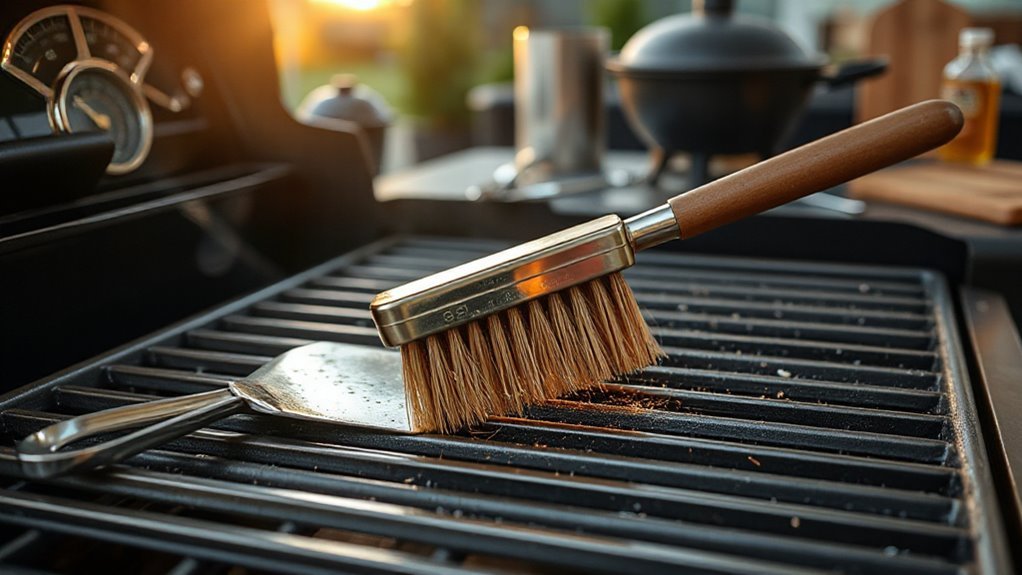
So, how do we get the grill ready before we even think about cooking? First, we grab a sturdy brush and sweep away any charred bits; the type of grate material matters, so we choose a nylon‑bristled brush for porcelain or a softer pad for stainless steel. Next, we fire up the burners and let the grill preheat—this isn’t just for heat, the preheating benefits include incinerating lingering grease and making the final scrub easier. We keep it at about 500 °F for ten to fifteen minutes, then turn it off and let it cool just enough to handle. Finally, we dry the grates thoroughly with a clean cloth, because any moisture left behind could rust later. This quick routine sets the stage for a cleaner, safer cookout.
Apply a Baking‑Soda Paste to Clean Grill Grates
When we whisk together a simple baking‑soda paste, it feels almost like a little kitchen hack that actually works—maybe because the mild abrasive gently lifts char without scratching.
For paste preparation we combine three parts baking soda with just enough water to form a thick, spreadable consistency. It’s not too runny, not too dry, so we can easily coat the grates.
During paste application we dip a soft sponge or nylon‑bristled brush into the mixture, then spread it over the still‑warm bars, letting the paste sit for ten to fifteen minutes.
The soda loosens stubborn residue while we wait, and the scent of soda and heat oddly reminds us of fresh‑baked cookies.
After the dwell time we lightly scrub, rinse, and dry, noticing how the surface looks brighter, almost as if we’ve given the grill a quick spa treatment.
Soak and Scrub to Clean Grill Grates Faster
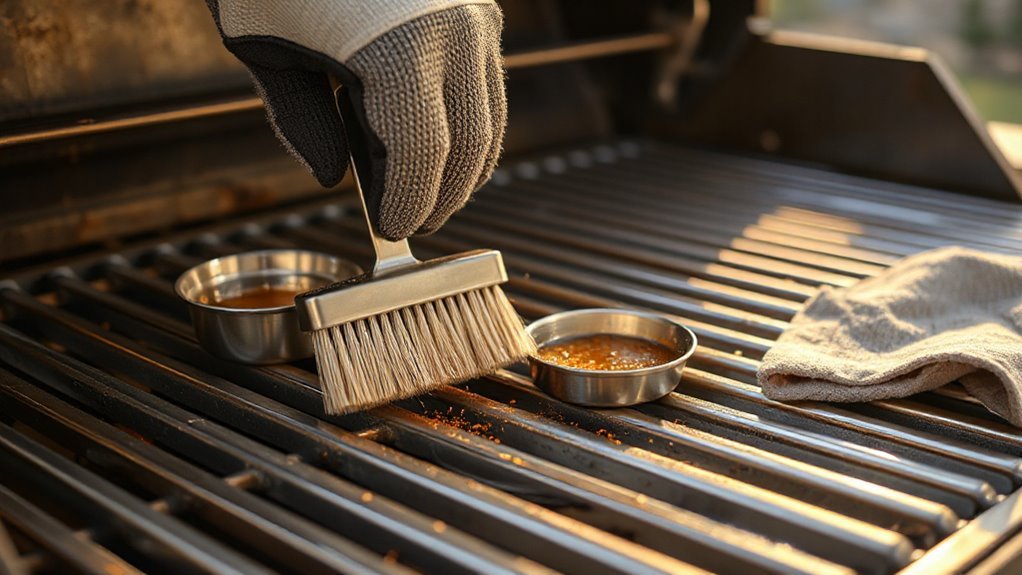
After we’ve coaxed the baked‑soda paste into loosening the surface grime, many of us find that a quick soak can cut the rest of the work down dramatically. We fill a bucket with hot, soapy water—sometimes adding a splash of TSP for tougher spots—and let the grates sit for fifteen to twenty minutes. The heat softens the residue, and the soap lifts it away, so when we pull them out the scrubbing feels almost effortless. A short, vigorous scrub with a nylon brush then clears the remaining particles. It’s a simple topic idea that debunks the maintenance myths suggesting you must always scrape dry. We’ve noticed the method saves time, especially after a busy weekend cook‑out.
Degreaser vs. Vinegar: When to Use Each to Clean Grill Grates
If you’ve ever stared at a grill covered in stubborn, greasy residue and wondered whether to reach for a commercial degreaser or a simple vinegar‑water mix, you’re not alone. We tend to grab the first thing that promises speed, but a degreaser works best when the grease is baked on after a high‑heat session; it penetrates, loosens, and after a 40‑minute wait, the grime lifts away.
On the other hand, a natural degreaser like a 50/50 vinegar‑water solution is gentler, great for light buildup or when we’re wary of chemical residues. We sometimes mix vinegar with a splash of lemon for extra freshness—perhaps overthinking it, but it feels safe. When the grill is heavily soiled, we consider degreaser alternatives such as TSP, yet for regular maintenance we stick with the vinegar mix, appreciating its simplicity and low‑cost appeal.
Follow Material‑Specific Cleaning Rules for Stainless, Porcelain, and Cast Iron
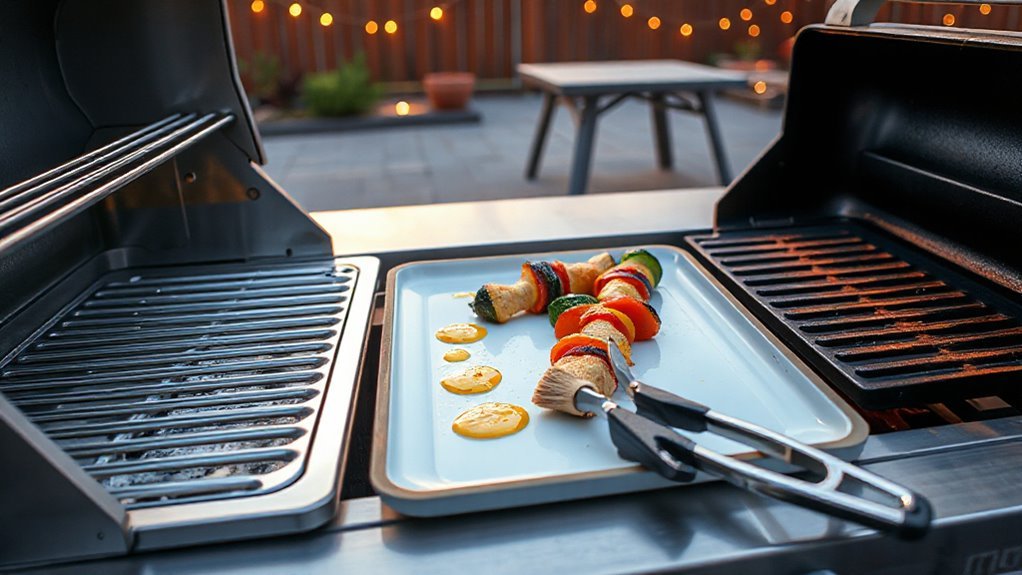
Ever wondered why the same cleaning routine works wonders on steel but turns porcelain into a mess? We’ve learned that each grate type demands its own care, and we’ll walk through it together. For stainless, we stick to synthetic pads and a gentle brush technique, preserving nonstick safety. Porcelain needs a soft‑bristled brush and never metal scrubbers—otherwise you’ll ruin the glaze. Cast iron thrives on a sturdy steel brush, then a quick oil wipe to seal the surface.
| Material | Recommended Brush | Key Safety Tip |
|---|---|---|
| Stainless | Nylon‑bristled | Avoid abrasive pads |
| Porcelain | Soft‑bristled | No metal or foil |
| Cast Iron | St stout steel | Oil after cleaning |
| All types | Microfiber cloth | Dry thoroughly |
| All types | Gentle pressure | Preserve nonstick safety |
We try not to over‑think it, but a little attention to these rules keeps our grates looking great and cooking safely.
Remove Rust, Season Cast Iron, and Buff the Grates for Long‑Term Protection
Ever notice how a little rust on a cast‑iron grill can feel like a personal affront? We usually start by soaking the grates in a 50/50 vinegar‑water mix for an hour, then give them a good scrub with a nylon brush. After the rust lifts, we dry them thoroughly—any moisture invites more rust, and we’re not about to let that happen.
Next, we apply a thin coat of vegetable oil, spreading it evenly, and heat the grill to about 500°F for ten minutes. That high‑heat oil seasoning locks in protection and creates a non‑stick surface.
Finally, we buff the grates with a microfiber cloth, wiping away any streaks. This routine, a little rust prevention and a solid oil seasoning, really extends the grill’s life.
Frequently Asked Questions
Can I Use a Grill Brush on Porcelain‑Coated Grates Without Scratching?
We’re sure you’ll love the irony of using a grill brush on porcelain‑coated grates—yes, you can use one, but only a soft, non‑metallic brush, or you’ll scratch the delicate finish.
What Temperature Should I Set the Grill for Optimal Pre‑Heating Before Cleaning?
We recommend setting the grill to a preheat temp of about 500 °F for 10‑15 minutes; this high heat boosts grill maintenance, incinerating residue and making the subsequent cleaning far easier.
Is It Safe to Reuse a Baking‑Soda Paste on Multiple Cleaning Sessions?
We think it’s safe to reuse the baking‑soda paste if you keep it sealed and fresh, but avoid contaminating it with grease or food debris; otherwise, make a new batch for each cleaning session.
How Often Should I Season Cast‑Iron Grates After Each Use?
We season after each use, like a medieval blacksmith oiling his sword, because regular seasoning frequency keeps cast‑iron maintenance simple and prevents rust, ensuring the grates stay non‑stick and ready for the next feast.
Can I Clean Grill Grates With a Dishwasher‑Safe Cleaning Pad?
We’d say yes—dishwasher‑safe cleaning pads work fine, but we still recommend a grill brush without scratching for tough bits, then rinse the pad in the dishwasher for a quick, thorough clean.