When I first tried to scrub a flat‑top that had seen a summer of burgers, the grease was so thick it felt like trying to peel a sticker off a car window—sticky, stubborn, and oddly satisfying when it finally gave way. We’ll start with safety, because a sudden flare‑up could ruin the mood, then heat the surface just enough to loosen the crust, and grab a sturdy scraper and a non‑abrasive pad; the key is to move quickly, wipe, and repeat, but maybe pause for a quick check of the grease chute before the mess spreads. The next steps get a little messier, yet they’re worth it, and I’ll walk you through them.
Prioritize Safety and Pre‑Heat the Flat‑Top Grill
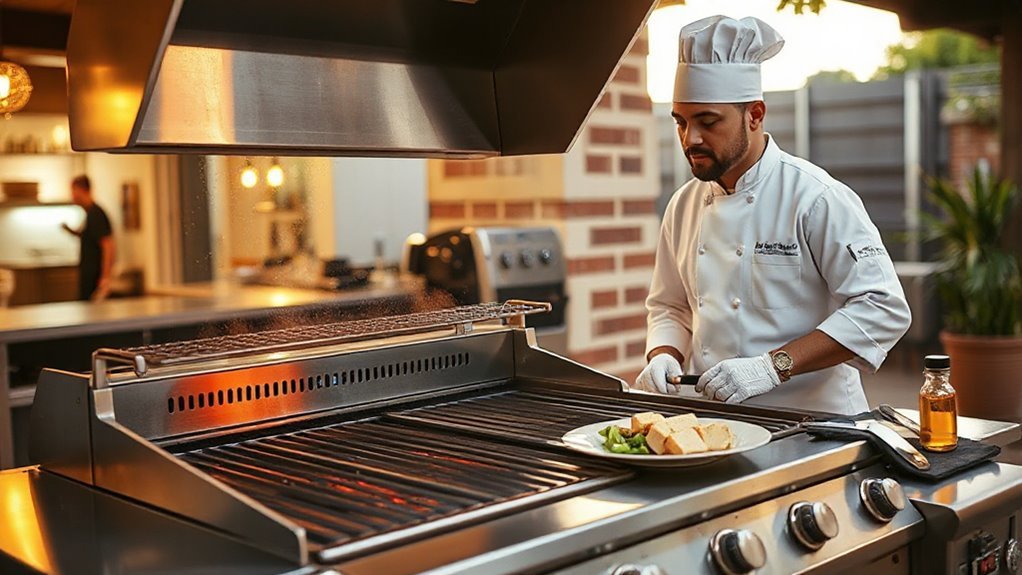
Before we even think about scraping away the crusty bits, we’ve got to make sure the grill is safe and warm enough to cooperate. A quick safety briefing reminds us to check for gas leaks, clear loose debris, and keep a fire extinguisher nearby—just in case.
Then we move to the pre heating steps: turn the burner to medium, let it run for about ten minutes, and watch the temperature climb to roughly 200‑250 °F. We usually feel the heat radiating, which tells us the grease is softening without risking a sudden flare‑up. It’s a bit of a habit now, this gentle ramp‑up, because it prevents thermal shock and makes the later scraping far easier. If anything feels off, we pause, reassess, and maybe adjust the heat a touch.
Gather Tools Needed for Flat‑Top Grill Cleaning
We’ll need a handful of tools before we even think about getting our hands on the grill’s surface. First, we should consider tool selection carefully; a sturdy metal scraper, a non‑abrasive pad, a stiff‑bristle brush, and a small bucket for water or oil are essential. I think it helps to keep a rag nearby for quick wipe‑downs, and perhaps a lightweight spray bottle for mild soap. When we’re done, storage tips matter too—hang the scraper on a hook, nest the pads together, and keep the brush in a dry compartment to avoid rust. Here’s a quick list to guide us:
- Metal scraper
- Non‑abrasive cleaning pad
- Stiff‑bristle brush
- Small bucket or spray bottle
Scrape and Wipe Daily to Control Grease Build‑up
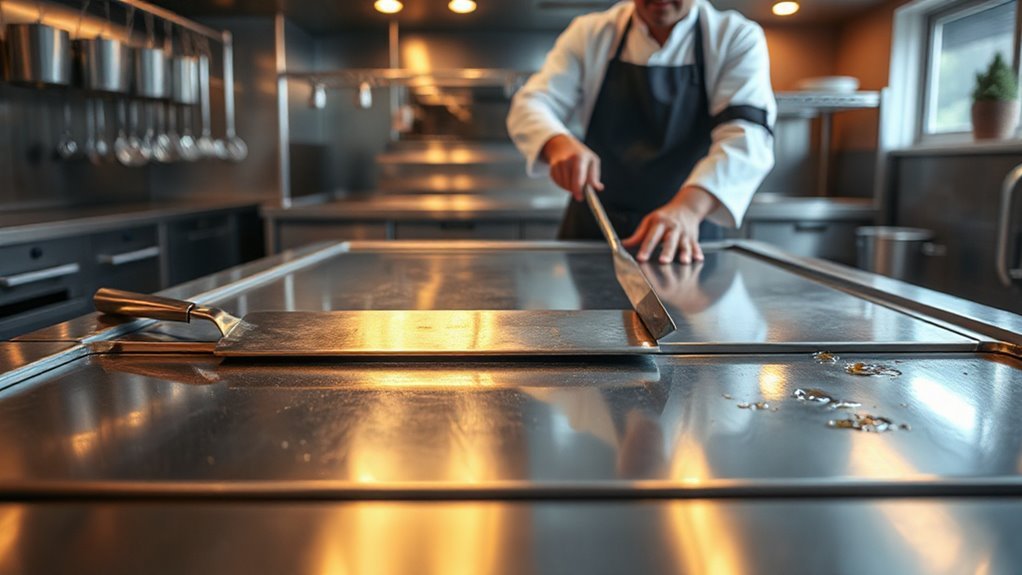
A few minutes of quick scraping and wiping each day can keep the flat‑top from turning into a greasy mess, and honestly, it’s not as tedious as it sounds.
We start by heating the surface just enough—around 200 °F—so the grease softens, then we glide the scraper across, pushing residue into the chute. It feels almost meditative, though we sometimes pause, wondering if we’re being too aggressive; a light touch usually does it.
After scraping, we wipe with a damp cloth, dabbing away the loosened film. This routine, part of our daily maintenance, gives us reliable grease control without the looming dread of a massive buildup later. It’s simple, effective, and surprisingly satisfying.
Tackle Stubborn Grease With Oven Cleaner and Pads
When the grease has hardened into a stubborn crust, we usually reach for a foaming oven cleaner and let it sit for a few minutes—just long enough for the chemicals to break down the buildup, but not so long that it starts to smell too strong.
We then grab a heavy pad, because the abrasive surface actually lifts the softened grime without gouging the steel.
It feels a bit like a science experiment, watching the foam bubble and the crust melt away.
Here’s what we typically do:
- Spray oven cleaner evenly across the hot surface.
- Let it dwell for 3‑5 minutes, watching the fumes.
- Scrub with a heavy pad in circular motions.
- Rinse, wipe dry, and—if any rust appears—apply a rust removal spot.
The result is a cleaner grill ready for the next round.
Remove Rust Safely and Restore the Cooking Surface
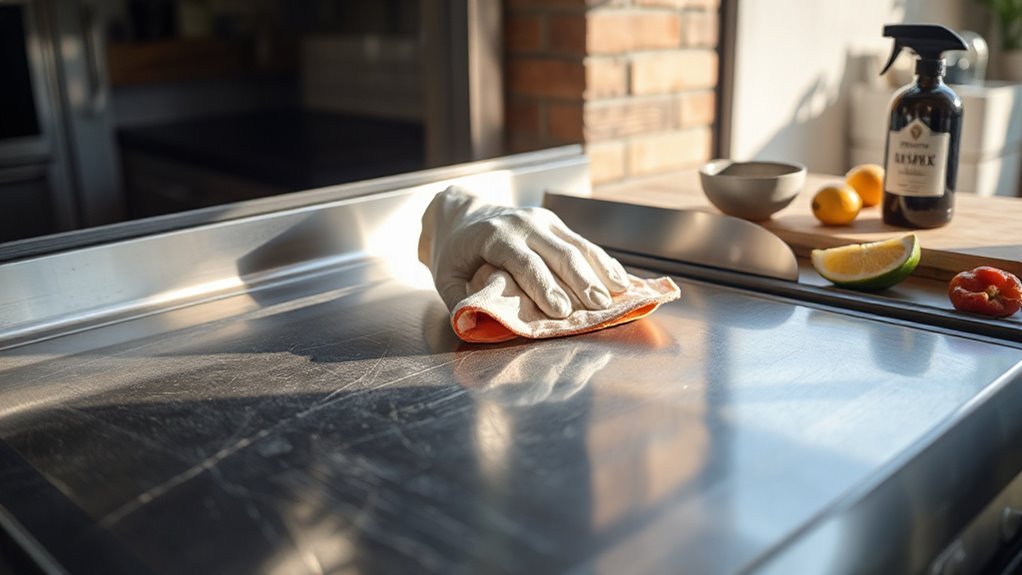
If rust has started to speckle the cooking surface, we’ll first loosen it up before we even think about scrubbing.
We heat the grill to a gentle 200 °F, just enough to soften any lingering grease, then grab a stiff wire brush and work in short strokes. The idea is to break the bond of rust without gouging the steel.
For stubborn patches we might dab a little vinegar or a commercial rust restoration product, letting it sit a minute or two—perhaps a bit longer if the aluminum corrosion is evident.
After the rust lifts, we rinse thoroughly, dry with a clean cloth, and finally apply a thin coat of oil to seal the pores. This routine keeps the surface functional and prevents future decay.
Sanitize With High Heat to Kill Bacteria and Odor
Ever wonder why a quick blast of high heat feels like the ultimate disinfectant for a flat‑top grill? We’ve tried the sanitizing technique ourselves, and the high heat method really does the trick. First, we crank the grill to its maximum setting and let it sizzle for ten minutes. The scorching surface incinerates lingering bacteria and neutralizes stubborn odors. It’s simple, yet surprisingly effective—perhaps because the heat reaches every crevice we can’t scrub out.
Here’s how we do it:
- Set the burner to the highest temperature.
- Maintain the heat for 10 minutes, watching the surface darken.
- Turn off and let it cool naturally, avoiding a sudden temperature drop.
- Inspect for any remaining smells before the next cooking session.
Season the Grill After Cleaning for Protection
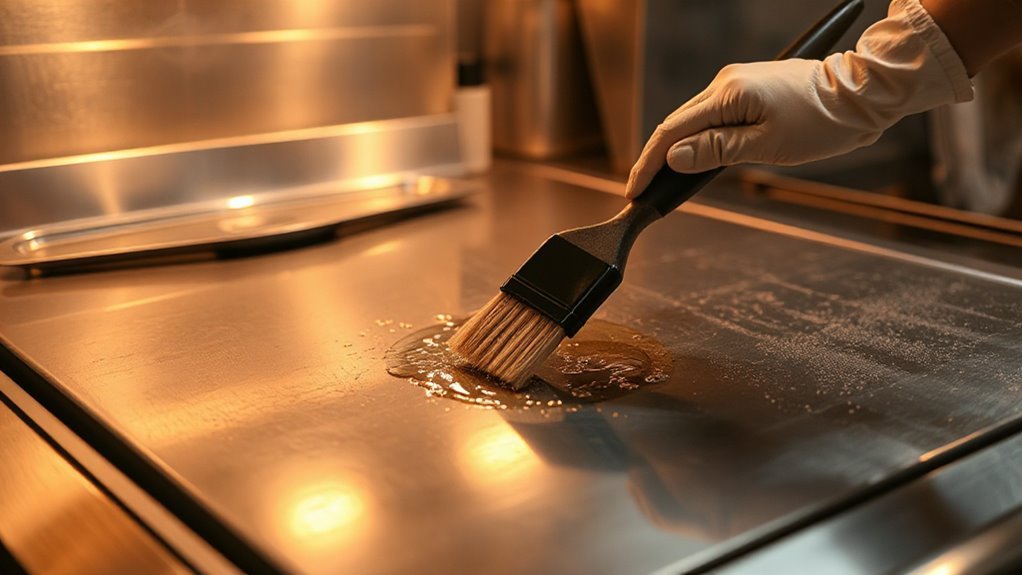
After the high‑heat blast we’ve just run, the grill’s surface is still glowing and, honestly, a little bit sticky from the residual oil.
We’ll now coat it with a thin film of seasoning oil, because that layer will protect the steel pores from rust and future food‑sticking.
First, we spread a light coat, then we crank the grill up to polymerization heat—usually when the oil just starts to smoke.
That smoke indicates the oil is breaking down and forming a durable, non‑stick polymer.
We let it bake for a few minutes, then turn it off and let the surface cool slowly.
It’s a simple step, but it really seals in the protection we need for the next cooking session.
Frequently Asked Questions
Can I Use a Pressure Washer on the Grill Body?
We don’t recommend pressure washing the body; the force can bend metal and strip finishes. Instead, scrub with metal wool and a mild cleaner, then rinse gently and dry thoroughly.
Is It Safe to Clean the Grill With a Metal Wool Pad?
We don’t recommend using a metal wool pad; it can gouge the surface. Instead, try safe alternatives like a non‑abrasive scrubber or a heavy‑duty pad, which protect the grill while cleaning effectively.
How Often Should I Replace the Grease Tray Liner?
We recommend swapping the grease tray every three months, but if you notice leaks or buildup sooner, replace it immediately—especially before storage winter, when moisture can accelerate corrosion and affect performance.
Can I Store the Grill Outdoors in Winter?
We can store the grill outdoors in winter if we follow proper storage tips and winter protection: cover it tightly, elevate it off snow, and check for moisture buildup regularly.
Do I Need to Re‑Season After Every Deep Clean?
Think of the grill as a seasoned warrior; we don’t re‑season after every deep clean, only when the coating thins. Deep clean frequency dictates re‑seasoning necessity, so apply oil sparingly after major scrubs.